Routine pond care and pond cleaning, koi welfare, filter and pump checks, planting work and wildlife safe treatment.
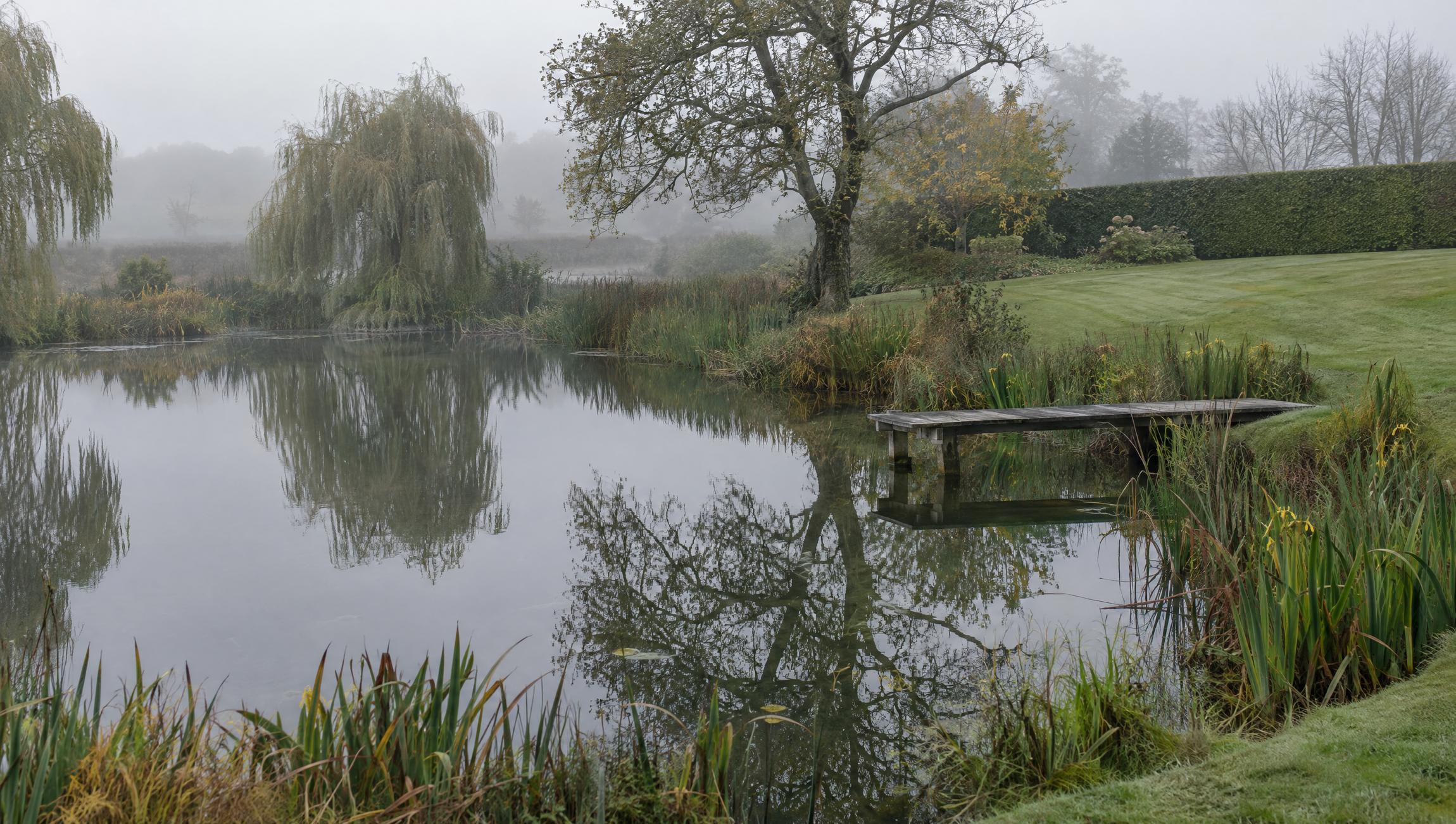
Routine pond maintenance covers the small ongoing care that keeps a pond looking after itself well between visits. Cleaning of debris and silt, planting work where the ecosystem needs balancing, filter and pump checks, water testing where appropriate, and wildlife safe treatment where it is genuinely needed.
Larger jobs sit alongside this. Full pond cleans, restoration of long neglected ponds, refits of tired filtration, and seasonal projects that benefit from being timed around mild water temperatures. The work is staged calmly across visits, with the fish kept comfortable throughout.
Most water problems are a light and nutrient problem before they are a chemical one. Green water and blanketweed thrive where there is plenty of sun on the surface, plenty of feed going in and not enough planting competing for what is dissolved in the water. Surface cover from lilies over roughly a third to a half of the pond, submerged oxygenators working underneath, marginal planting drawing nutrients out at the edges and a sensible hand on the fish food will do more, and last considerably longer, than repeated dosing. Treatment is used where it is actually needed rather than as a substitute for balance.
Filtration rewards a light touch. Media is rinsed in pond water and never under the tap, because chlorine kills the bacteria colony that is doing the real filtering and sets a pond back weeks for the sake of a convenient hose. Ultraviolet clarifier lamps fade a long time before they stop lighting up, so they are generally worth replacing once a year. Pump impellers get checked for the debris that quietly halves a flow rate, and a waterfall or fountain that has lost its push is often the first visible sign of something worth catching early.
The ponds looked after across Suffolk fall into three rough groups, and they want quite different things. Wildlife ponds, where the aim is a balanced margin, some open water and as little interference as possible. Ornamental ponds with a few goldfish, some lilies and a small pump, where the work is mostly about keeping the balance from tipping. Stocked koi ponds, which are closer to an aquarium than a garden feature and where filtration, water quality and fish welfare do most of the deciding. Natural swimming pools sit alongside these as their own specialism again.
A routine pond maintenance visit is short and regular rather than long and occasional, and that is the whole point of it. Surface debris lifted before it sinks and starts rotting. Blanketweed twisted out on a stick while there is still little enough of it for that to work. Marginal planting tidied and thinned where it is crowding out the open water. Pump and filter given a look, flow checked against what it was, ultraviolet lamp noted for replacement. Water level topped up where it has dropped. The whole thing takes a fraction of the time that a neglected pond takes to recover.
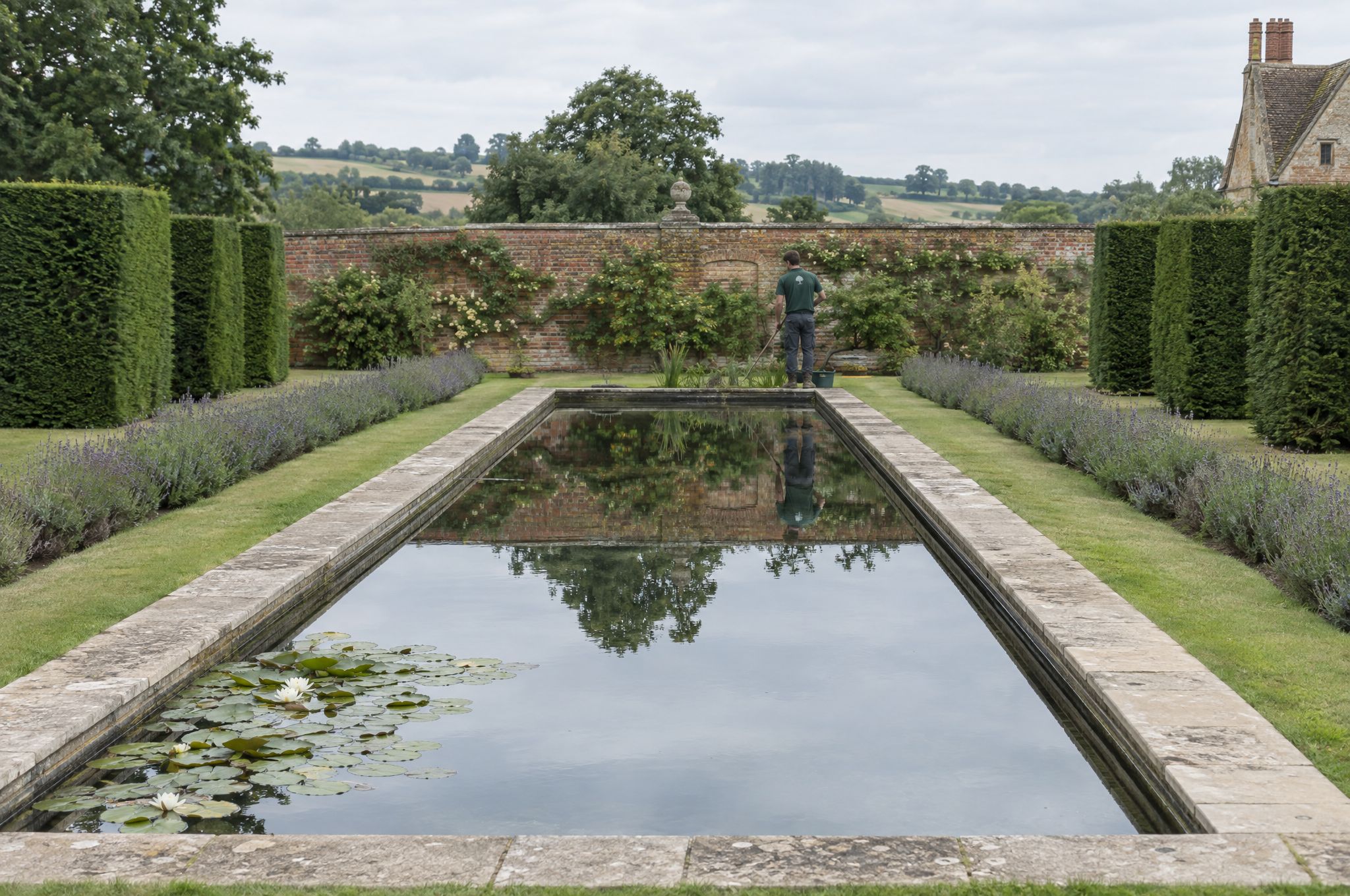
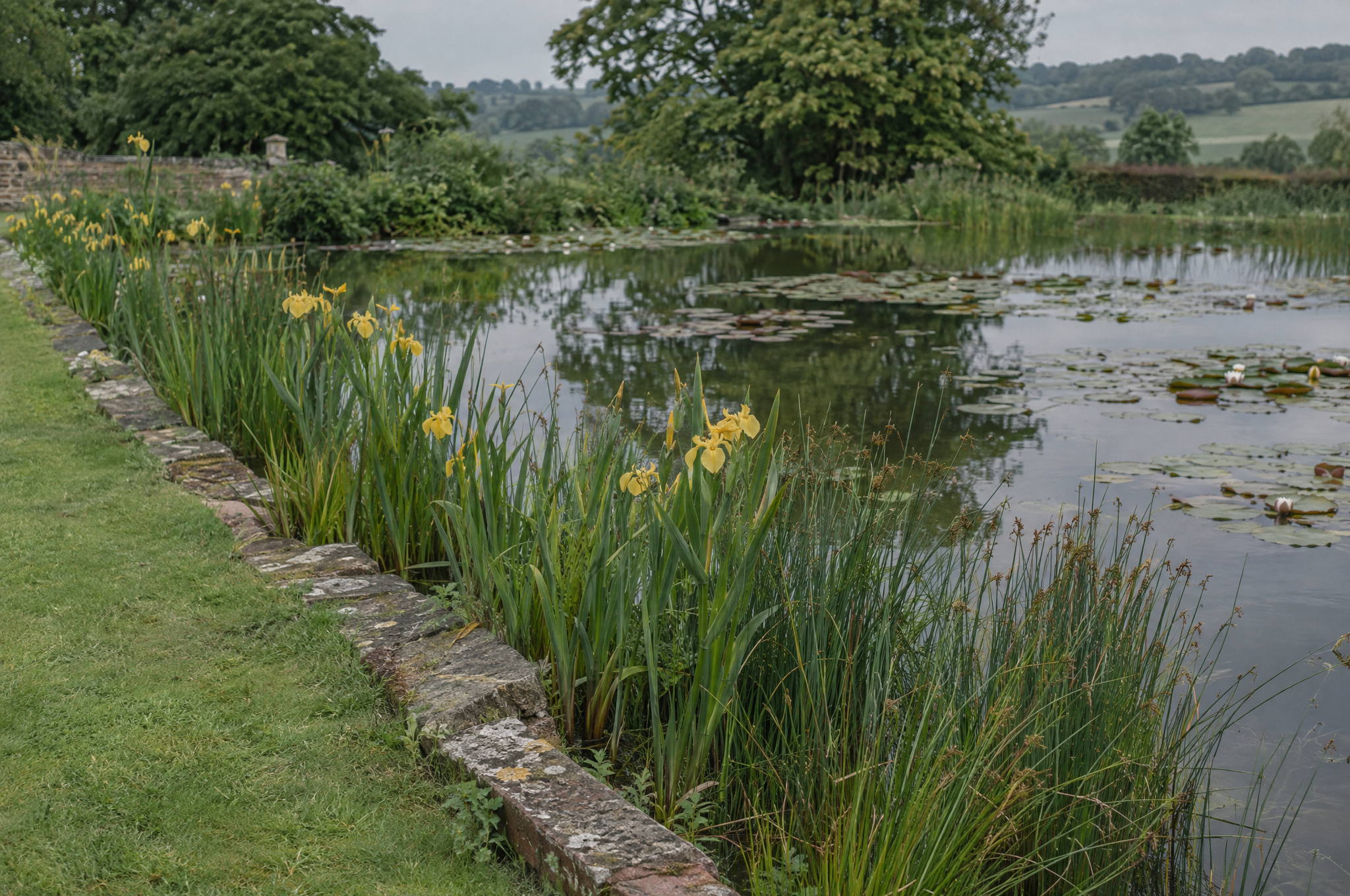
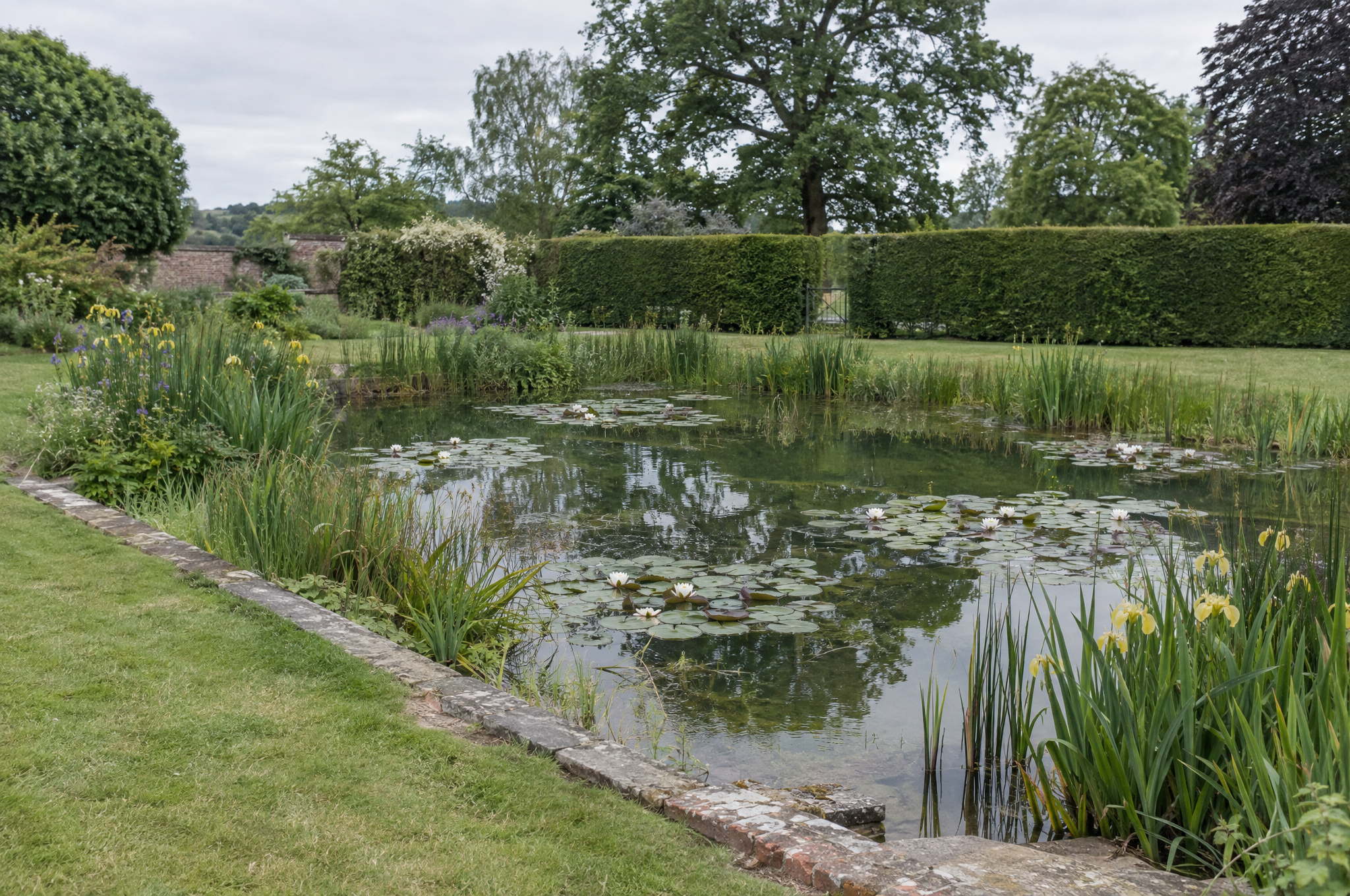
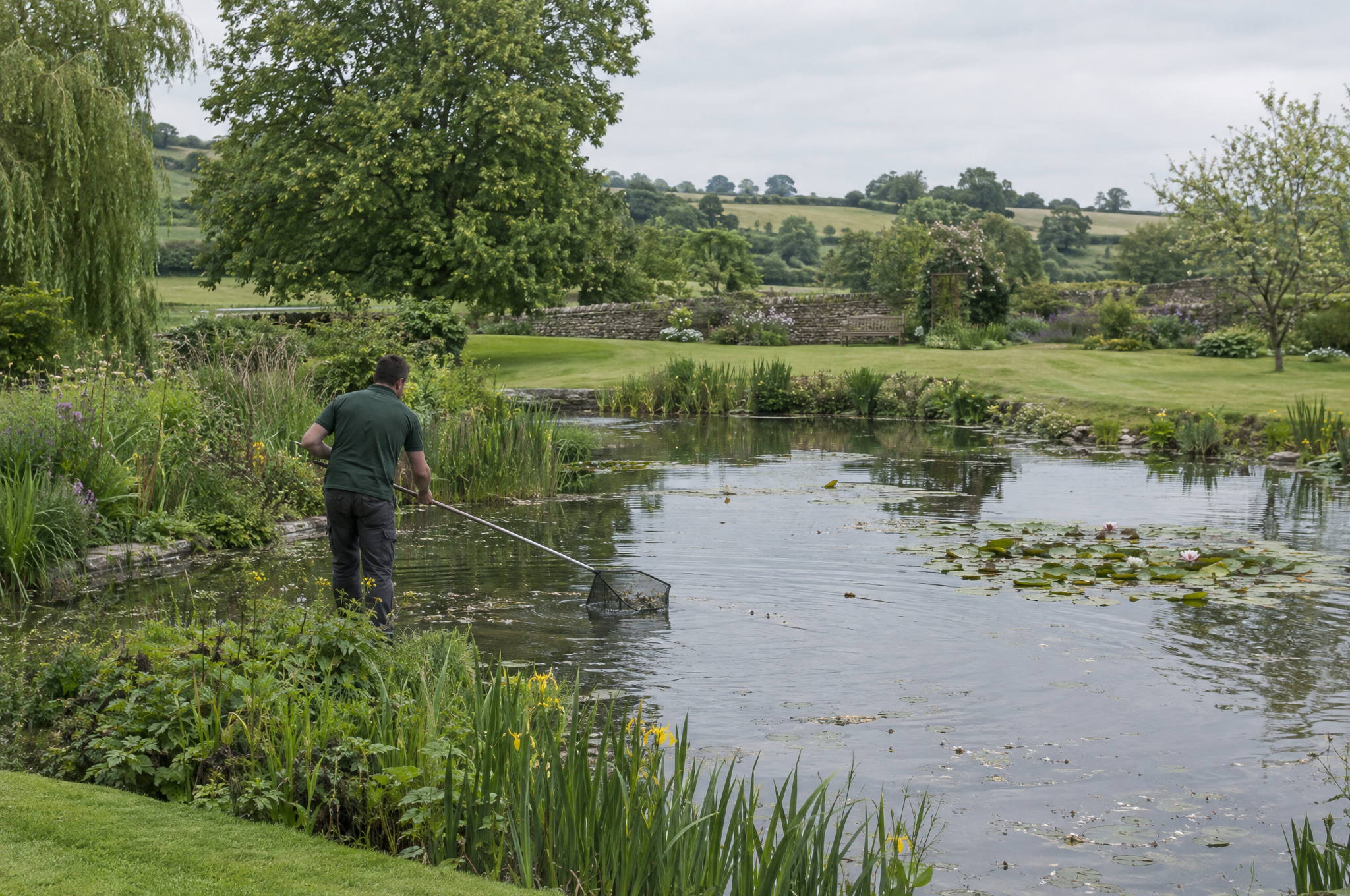
Koi are stress sensitive and far more easily harmed by a careless clean than by leaving a pond a little longer between cleans. A koi pond clean is staged rather than rushed. The fish are moved to a holding tank with sufficient aerated water from the pond itself, kept covered and quiet for the duration of the clean.
The pond water is partially exchanged rather than fully drained where possible. Silt and debris are lifted gently from the base. Filters are serviced. Plants are tidied or replanted. The water is brought back up gradually before the fish are returned, so the temperature gradient and water chemistry have time to settle. Returning fish too quickly is one of the most common mistakes in amateur pond cleans.
Silt gets the same restraint. A thin layer across the base of a pond is where a good deal of the beneficial bacteria live, so a clean lifts the excess and leaves the rest rather than scouring back to bare liner, which sets a settled pond back the better part of a year. In a wildlife pond, timing matters as much as technique: clearing is done in early autumn rather than spring, so spawn and tadpoles are not in the way, and whatever is lifted out is left beside the water overnight so anything living in it can find its way back.
Safety is part of pond work and worth raising rather than leaving unsaid, particularly where there are young children or grandchildren using a garden. Rigid mesh set just below the water line is close to invisible once the planting comes through and takes the weight of a child. Gently shelving margins matter more than depth for anything that falls in, including hedgehogs, which drown in steep sided ponds every summer. Where a pond cannot be made safe and is genuinely in the wrong place, converting it to a bog garden is a real option rather than a defeat.
Leaks are the other conversation that comes up regularly, and they are usually less dramatic than feared. A pond dropping a little in high summer is almost always evaporation, which on a warm week can take a surprising amount off a large surface. A pond that drops steadily to one particular level and then stops has a leak at that height, which narrows the search considerably. A pond that empties completely is usually a liner puncture or a failed seal at a pipe. Watercourses and waterfalls are the most common culprits, since a liner edge that has settled by a centimetre will wick water out of the system all day.
Spring and early autumn are the best windows for a thorough pond clean. Water temperatures are mild, fish are active but not stressed, and the pond has time to settle before summer or winter. April and May, and September into early October, are the ideal months across Suffolk for a major clean. Smaller maintenance work happens through the year, but the major visits are timed to suit the pond.
Autumn and winter are mostly a question of oxygen. Netting goes over before the leaves start dropping, because leaves rotting on the base pull oxygen out of the water and release tannins as they go, and that is behind a fair proportion of the fish lost over winter. Feeding tails off as the water cools and stops altogether below around eight to ten degrees, when koi can no longer digest what they are given. If the surface ices over, a hole is kept open with a floating ball or a pond heater rather than broken with anything solid, since the shock of a blow carries straight through the water and does the fish real harm.
Spring is the restart. Once the water is holding above about ten degrees, filters are cleaned, the pump is brought back up to full flow and feeding begins again lightly with an easily digested wheatgerm food. Water is tested where it is useful, particularly on newer ponds and after any substantial top up, since mains water arrives with chlorine in it and a pond that has just been refilled behaves quite differently from one that has been running quietly for years.
A full pond clean is booked ahead rather than at short notice, both because the right weeks are narrow and because the work needs the weather on its side. Quotes are given in writing in advance and reflect the size of the pond, the stock, the state of the silt and where the water and waste can go. Nothing is started until the plan for the fish is settled. The one thing worth avoiding is a clean booked in a hurry in high summer, which is the worst possible time for it and the time people most often ask.
Where we already look after the wider garden, the light routine part of pond care sits naturally inside a garden care round, which is much the best way to have it done, since little and often is what a pond actually responds to. The hard landscaping around a pond is a separate matter again; algae on the stone surround and the decking of a pond edge is handled with careful jet washing, kept well away from the water and with the run off directed to a drain rather than back into the pond.
Ponds sit awkwardly in most maintenance arrangements. The light and regular part of the work, lifting surface debris, keeping leaves out, tidying marginal plants, glancing over the pump and noticing when the water has changed character, belongs with everything else that happens in the garden, and it is far better done little and often than saved up for one visit a year. For clients whose gardens we already look after through the seasons, that routine light care can sit within an agreed plan under Four Seasons Garden Care, our ongoing garden care programme, so the pond is watched rather than remembered.
The specialist work stays exactly where it belongs. Deep cleans, restoration, draining, holding fish, major sludge removal, leak investigation and liner work are quoted separately as jobs in their own right, with the time, equipment, water handling and care they genuinely require. Nobody is well served by pretending an afternoon in the garden covers a pond restoration.
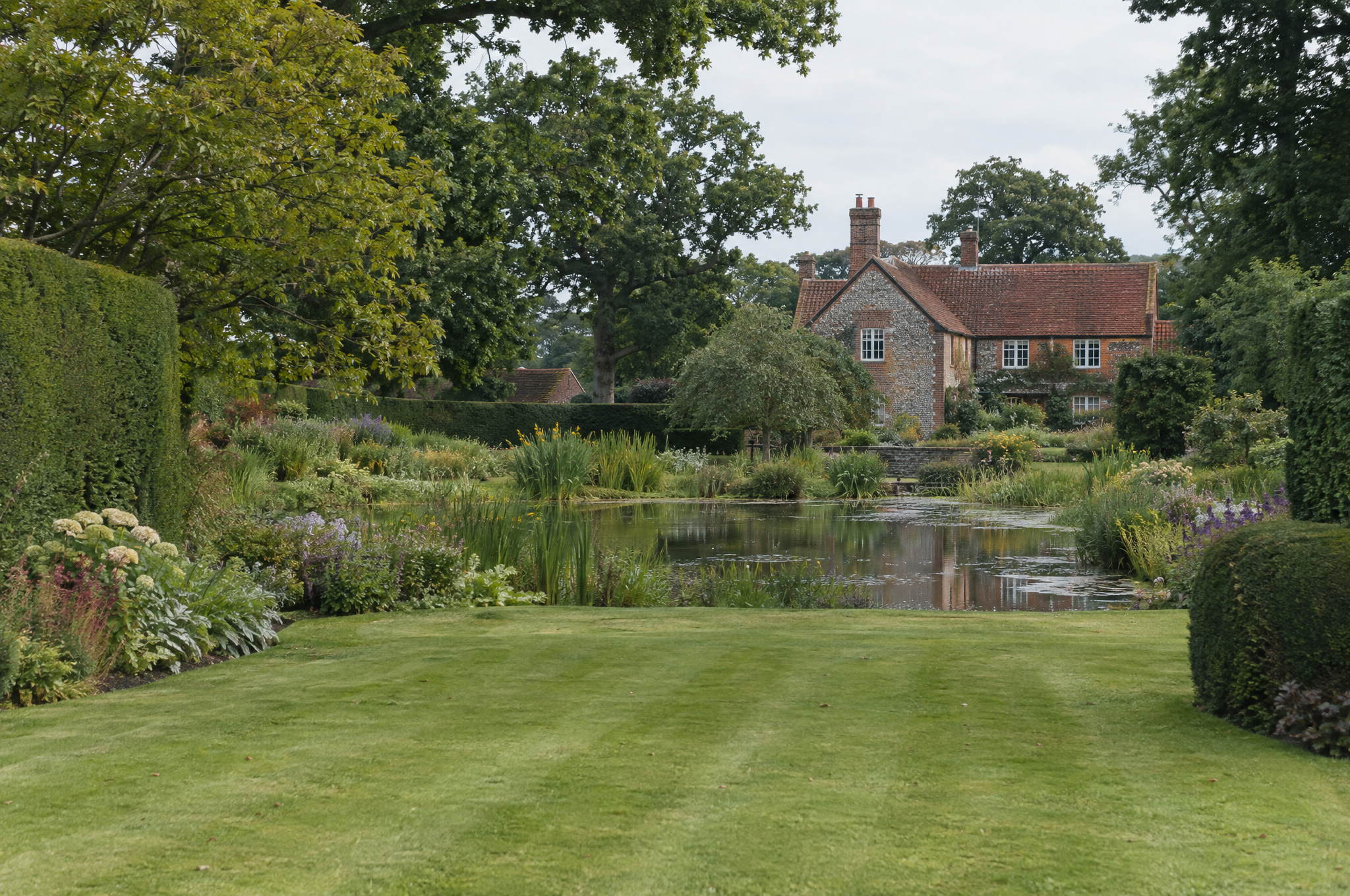
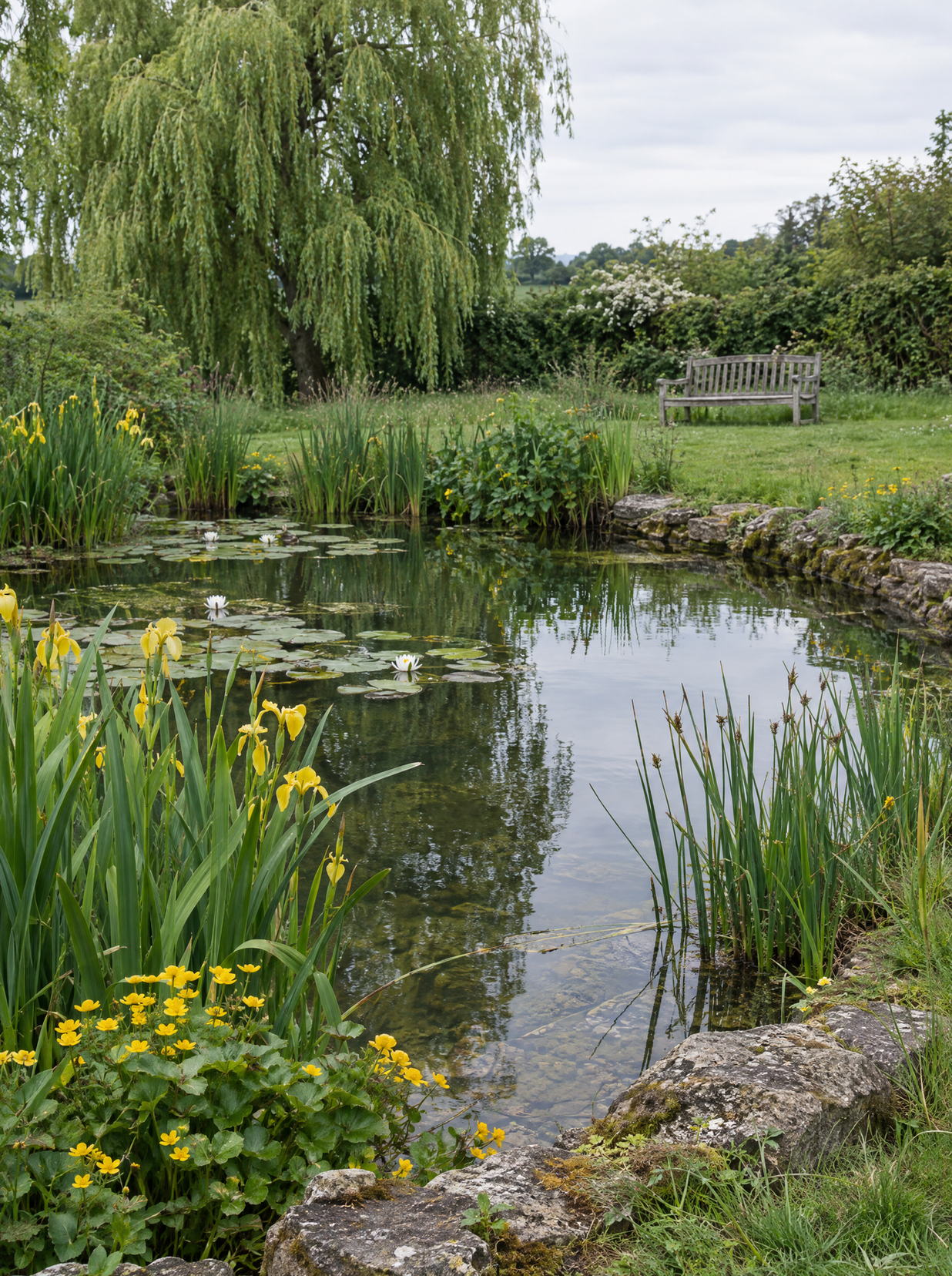
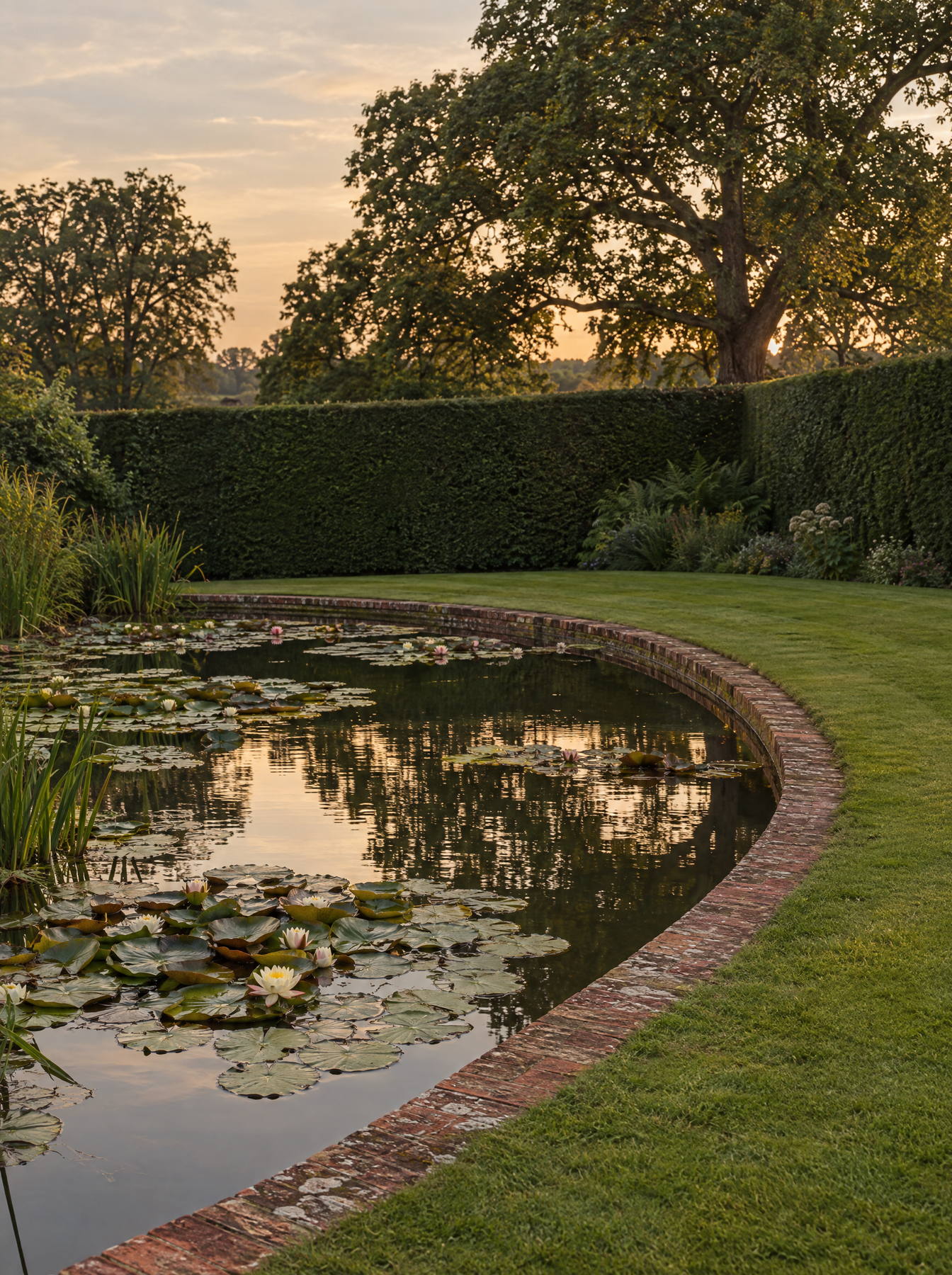

Suffolk Garden Maintenance covers the wider set of jobs that keep a country garden in good order through the year. Regular lawn cuts and crisp edging, careful weeding and considered pruning, seasonal tidy ups, the occasional one off restoration of an overgrown plot, pond cleaning and treatment, and jet washing of patios and paths.

CARE
Garden CareA regular garden care round looking after the whole garden, with grass cutting, edges and beds kept calmly in good order season after season.

CUT
Lawn CutsWeekly and fortnightly mowing rounds on a fixed day, with crisp edges, even stripes and every clipping cleared.

SHAPE
Hedge TrimmingEven cuts and careful shaping for boundary hedges, formal yew, beech, hornbeam, hawthorn and feature shrubs.
PRUNE
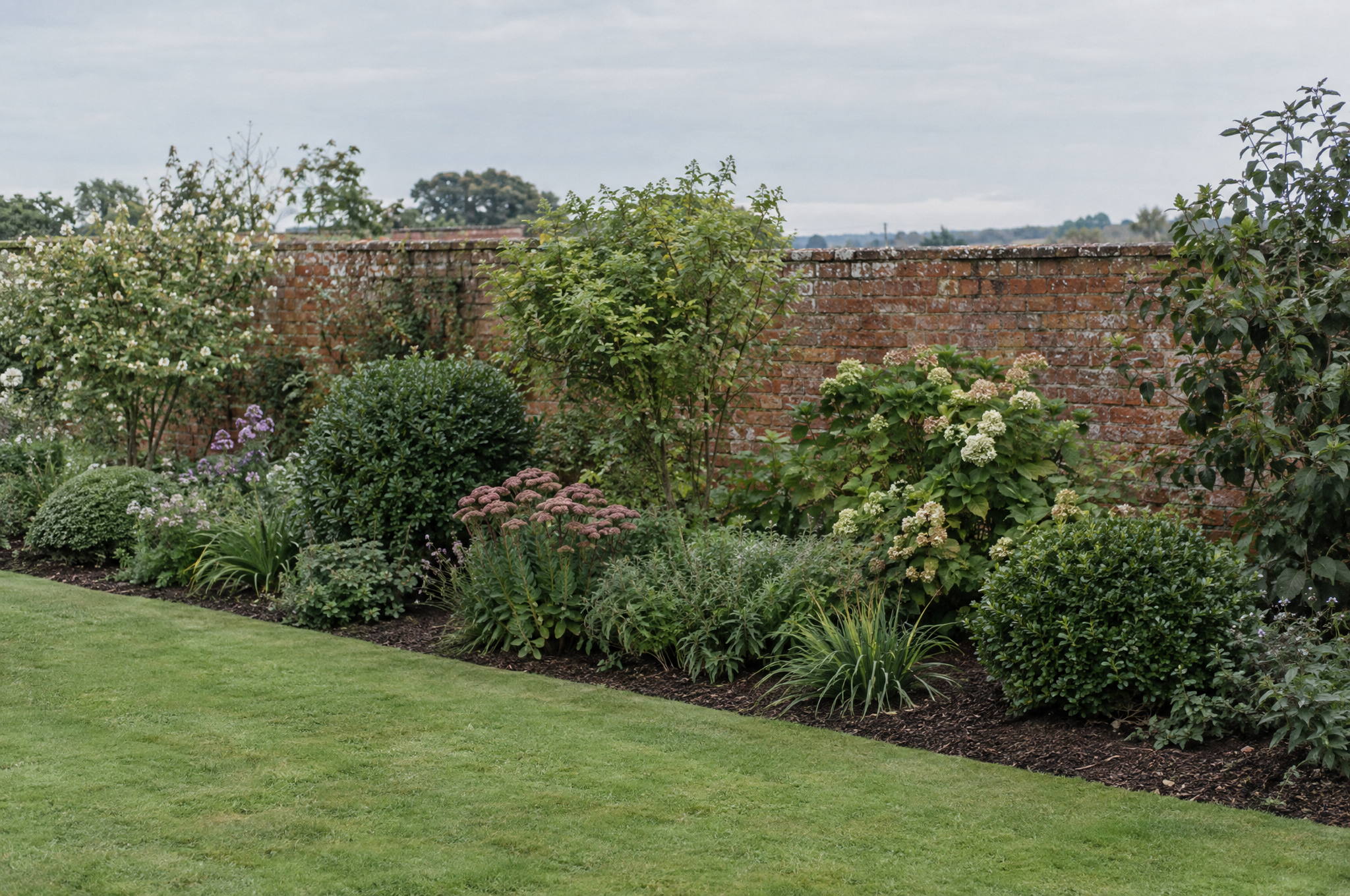
Weeding and PruningConsidered pruning of shrubs, roses, climbers and small trees, with beds, gravel and paving kept clean.

CLEAR
Seasonal Tidy UpsSpring resets, a midsummer garden tidy up and a pre winter tuck up for gardens that do not need a full round.
RESTORE
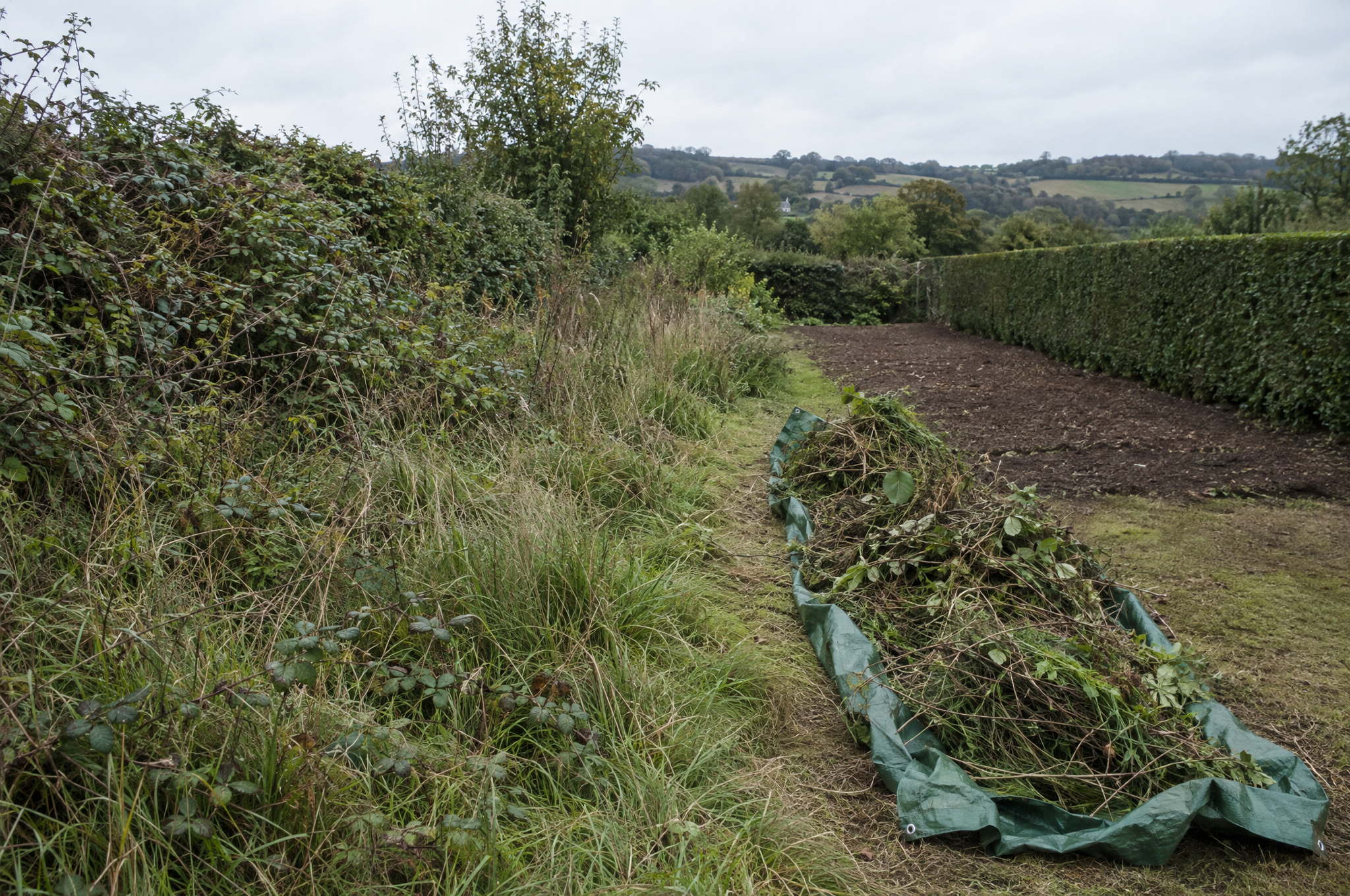
Garden Clean UpsOne off garden clearance and restoration of overgrown gardens, brought back into good order calmly and at your pace.

WASH
Jet WashingCareful jet washing of patios, paths, driveways and stonework, with the pressure matched to the surface.
Enquiries are read in person, by Elliott. A few lines about the garden, the kind of work you have in mind and roughly where you are in Suffolk is all we need to start. Where it makes sense, we will arrange a quiet visit to look round the garden and talk it through.