A regular garden care round looking after the whole garden, with grass cutting, edges and beds kept calmly in good order season after season.

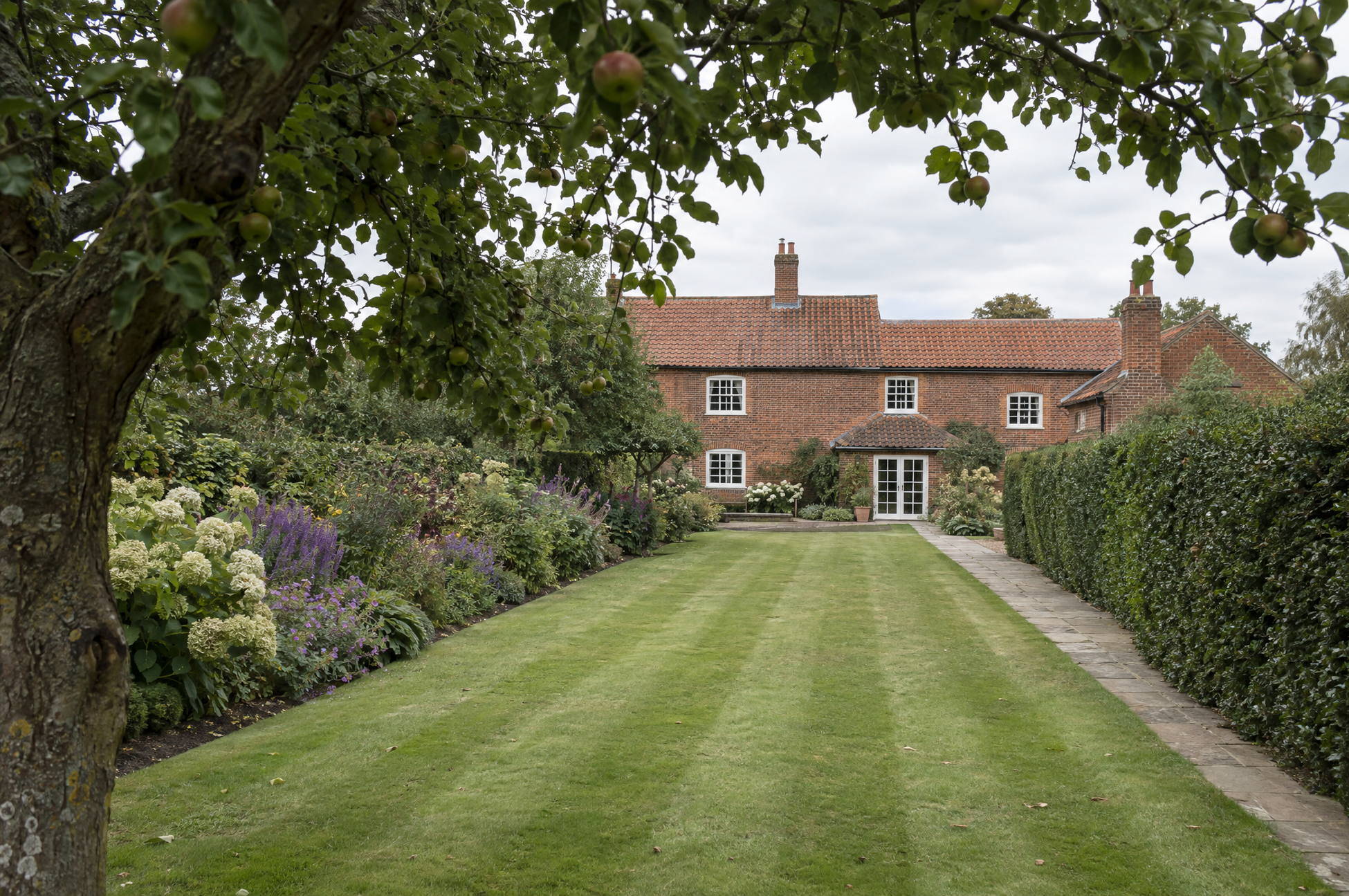
A Garden Care round is the bread and butter of the practice. Most visits cover the lawn (cut, edged, clippings cleared), the beds (weeded, dead headed where useful, lightly pruned), the paths (swept, gravel cleared of weeds), and the hedges (kept tidy between the larger annual or biannual cuts). The work is calm, methodical, and finishes neatly each time.
Each round is shaped to the garden it serves rather than forced into a single template. Some gardens want most of the time on the lawn and edges, others on the borders, others on the pond and the wider planting. Visit length and frequency adjust to suit, and the work pattern changes through the year as the garden does. A May visit and a January visit in the same garden look almost nothing alike.
The test of a round is what the garden looks like once the van has gone. Edges redrawn to a clean line. No clippings left on the paving or blown back into the borders. Gravel free of the seedlings that were coming through last time. Gates closed, taps off, green waste away with us. Nothing announces that anyone has been, except that the place looks better than it did that morning.
Suffolk ground makes its own demands on all of this. The heavy boulder clay through the middle of the county holds water all winter and sets hard by July, so borders are worked from the path rather than trodden when wet, and a good mulch matters more than a watering can. The lighter sandy soils to the west and out towards the coast drain almost too freely and dry out fast in what is already one of the driest counties in the country. A round that pays attention to this puts the time where the garden is actually under pressure.
Grass cutting is what a garden asks for most often between April and October, and it sets the tone for everything else the eye reads. The balance shifts as the year turns. Mowing and edging dominate the summer visits, border work and pruning take over through the autumn, and the winter rounds are mostly leaf clearance, structural cutting and getting the bones of the garden back into view. Where a property has a terrace, an orchard or a pond, those take their share of the time as well.
What a round does not cover is worth saying plainly, because vagueness here is where most garden maintenance arrangements go wrong. Major hedge reductions, tree work, large clearances, new planting, materials and green waste removal beyond the agreed arrangement are quoted as separate jobs, since each needs its own time, equipment and disposal. If a garden needs bringing back under control before a regular round can be effective, that is a garden clearance first and a round from there.


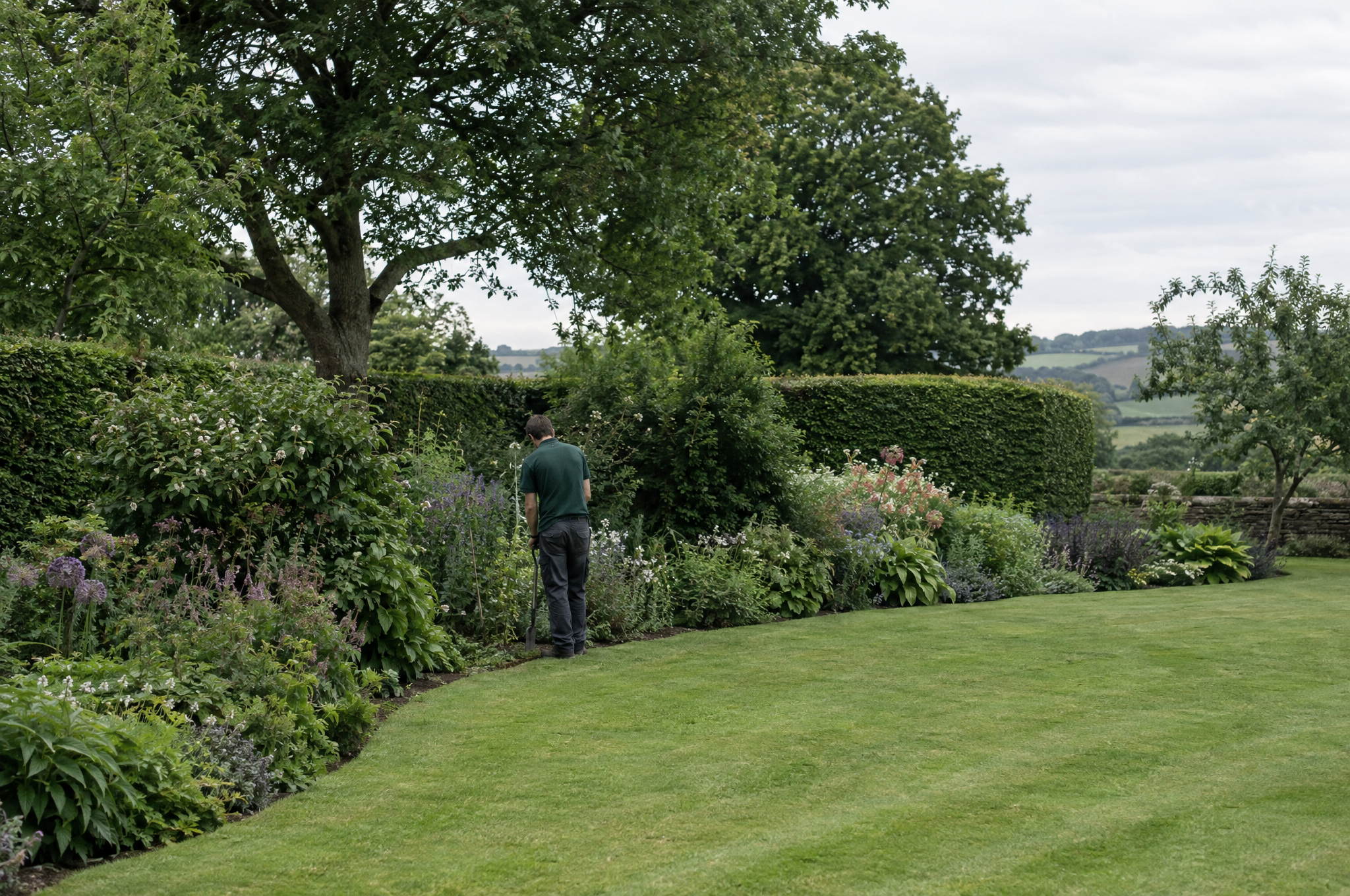
Continuity is the point of a Garden Care round. The same person comes each week or fortnight, learning the garden over time, remembering what was done last visit, noticing the small changes that matter through the year. Where the drainage gives trouble in winter. Where the roses want pruning hard. When the pond pump needs a clean. Which corner gets battered by the prevailing wind.
That continuity is part of why the round only grows slowly. New gardens are taken on at a pace that lets each one keep getting the attention it should. There is no rotating roster of staff, no agency labour, no last minute substitutes. Your garden is looked after by someone who knows it, in the same way a good chef stays in their own kitchen.
Knowing a garden is also what makes the small decisions right. Knowing that the bulbs run in a drift under the apple tree means the mower stays off that patch until the foliage has died back properly, roughly six weeks after flowering, rather than tidying it away in April and losing next spring's display. Knowing which hydrangea flowers on old wood and which flowers on new means neither one gets the wrong cut in March. None of that can be picked up by someone seeing the garden for the first time with a list in their hand.
Continuity also gets the small recurring jobs into a rhythm rather than a backlog. Ties and stakes checked before the autumn gales come in. Leaves off paths and steps while they are still dry enough to sweep rather than scrape. The seedlings in the gravel taken out at two inches rather than two feet. None of it is difficult on its own, and all of it together is the difference between a garden that is kept and a garden that is caught up with twice a year.
The round is where problems surface early, too. A hedge going bare at the base. A border that has quietly outgrown its edge. Standing water in a corner that drained perfectly well last winter. A shrub showing the first signs of honey fungus. Seeing a garden every week or fortnight across a full year means these arrive as observations rather than emergencies, and there is usually still time to do something useful and inexpensive about them.
Most rounds run weekly or fortnightly through the growing season (April through to October), with a lighter pattern through autumn and winter as growth slows and the work shifts to leaf clearing, structural pruning and tidying. Some clients prefer a fixed weekly schedule throughout, others a fortnightly visit with extra hours added in the busier months. Quotes are given clearly in writing in advance, with the visit pattern set out openly.
Grass sets the pace for most of the year. Growth runs hardest from late April into June, when a fortnightly gap can be a week too long. It often slows to a stop in a dry Suffolk July, when a lawn goes straw coloured and wants leaving alone rather than cutting. September rain usually brings a second flush that catches people out, and the last cut of the year normally falls somewhere between late October and the middle of November.
Winter visits earn their place, and they are the ones people are most tempted to cancel. Leaves come off the lawn and the paths. Structural pruning is done while the shape of a shrub is actually visible. Edges are cut back to their proper line, beds are mulched, climbers are retied before the gales, and the jobs that never have room in June finally have room. A garden kept through the winter starts the spring several weeks ahead of one that is picked up again in March.
The practical arrangements are settled once and then left alone. We agree the day, the frequency and roughly how long each visit runs, and that pattern holds. You do not need to be at home, provided access and any gate or dog arrangements are sorted in advance. Green waste leaves with us or goes to an agreed compost area on site. If a visit has to move for weather or ground conditions you are told rather than left wondering, and the work is picked up on the next one.
Some clients hand over the whole garden; others want a narrower brief, and that is entirely reasonable. If it is only the grass you would like taken off your hands, lawn mowing and grass cutting runs on its own fixed day. If the lawn is fine and it is the borders that have got ahead of you, a focused pruning and weeding visit is usually the better answer than a full round.
Rounds run across Suffolk, with the densest weeks around Needham Market, Stowmarket and Bury St Edmunds simply because that is where the van already is. Gardens further out are taken on where the frequency and the scale of the work make the travel sensible, which is a conversation worth having at the start rather than after a quote has been written.
A regular round handles the work in front of it, and for a great many gardens that is exactly right. Others reach a point where the useful question stops being what needs doing today and becomes what should be planned for the next three months: which shrubs are due a hard prune this winter, where a border has quietly outgrown itself, what the lawn is going to need once spring arrives.
Four Seasons Garden Care is our ongoing garden care programme for clients who would rather that thinking was done for them. The visits carry on much as they do now, but they sit inside a plan, with priorities assessed as the season turns, the garden recorded as it develops and the next stage agreed in advance rather than decided at the gate.

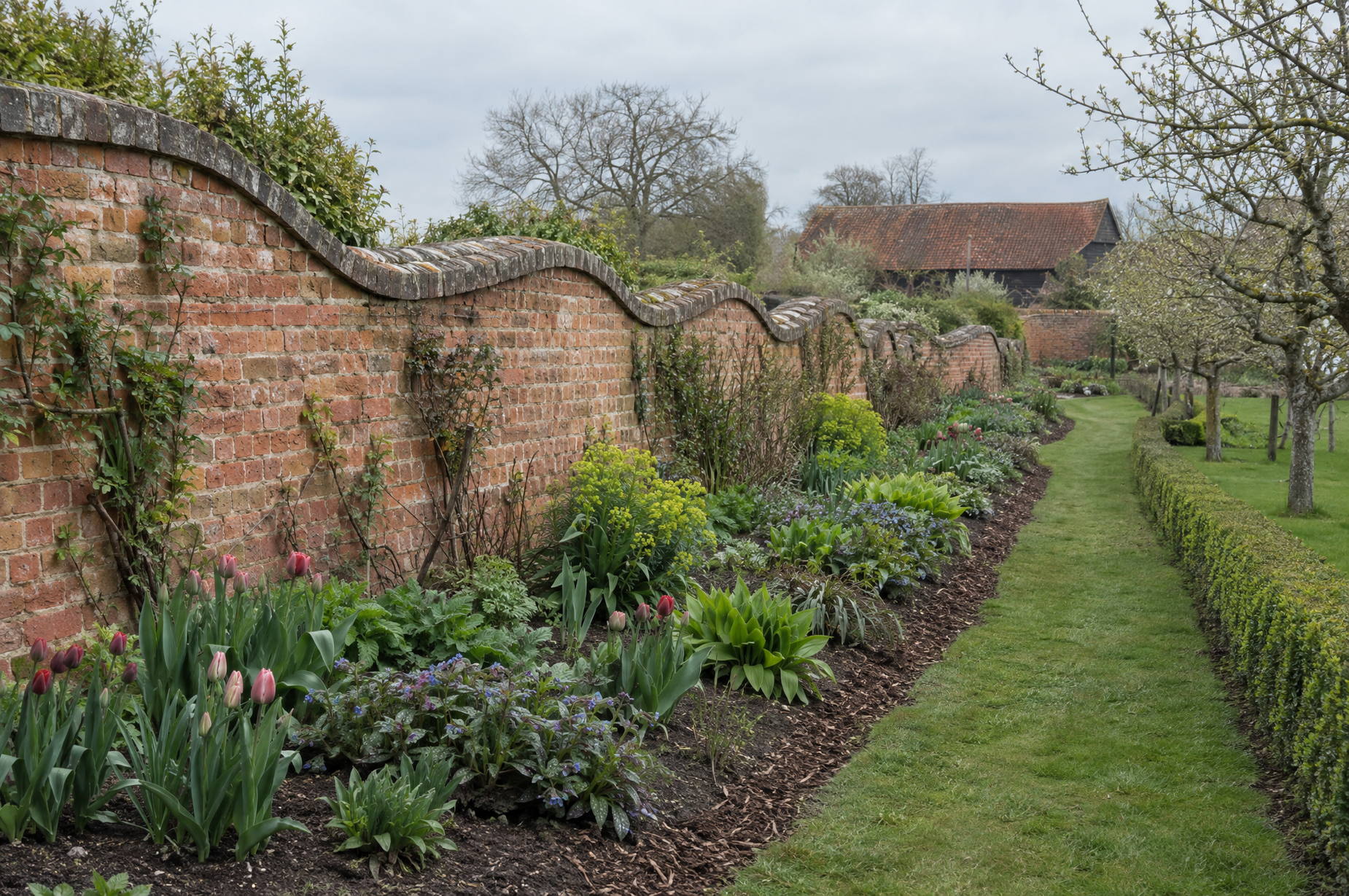


Suffolk Garden Maintenance covers the wider set of jobs that keep a country garden in good order through the year. Regular lawn cuts and crisp edging, careful weeding and considered pruning, seasonal tidy ups, the occasional one off restoration of an overgrown plot, pond cleaning and treatment, and jet washing of patios and paths.

CUT
Lawn CutsWeekly and fortnightly mowing rounds on a fixed day, with crisp edges, even stripes and every clipping cleared.

SHAPE
Hedge TrimmingEven cuts and careful shaping for boundary hedges, formal yew, beech, hornbeam, hawthorn and feature shrubs.
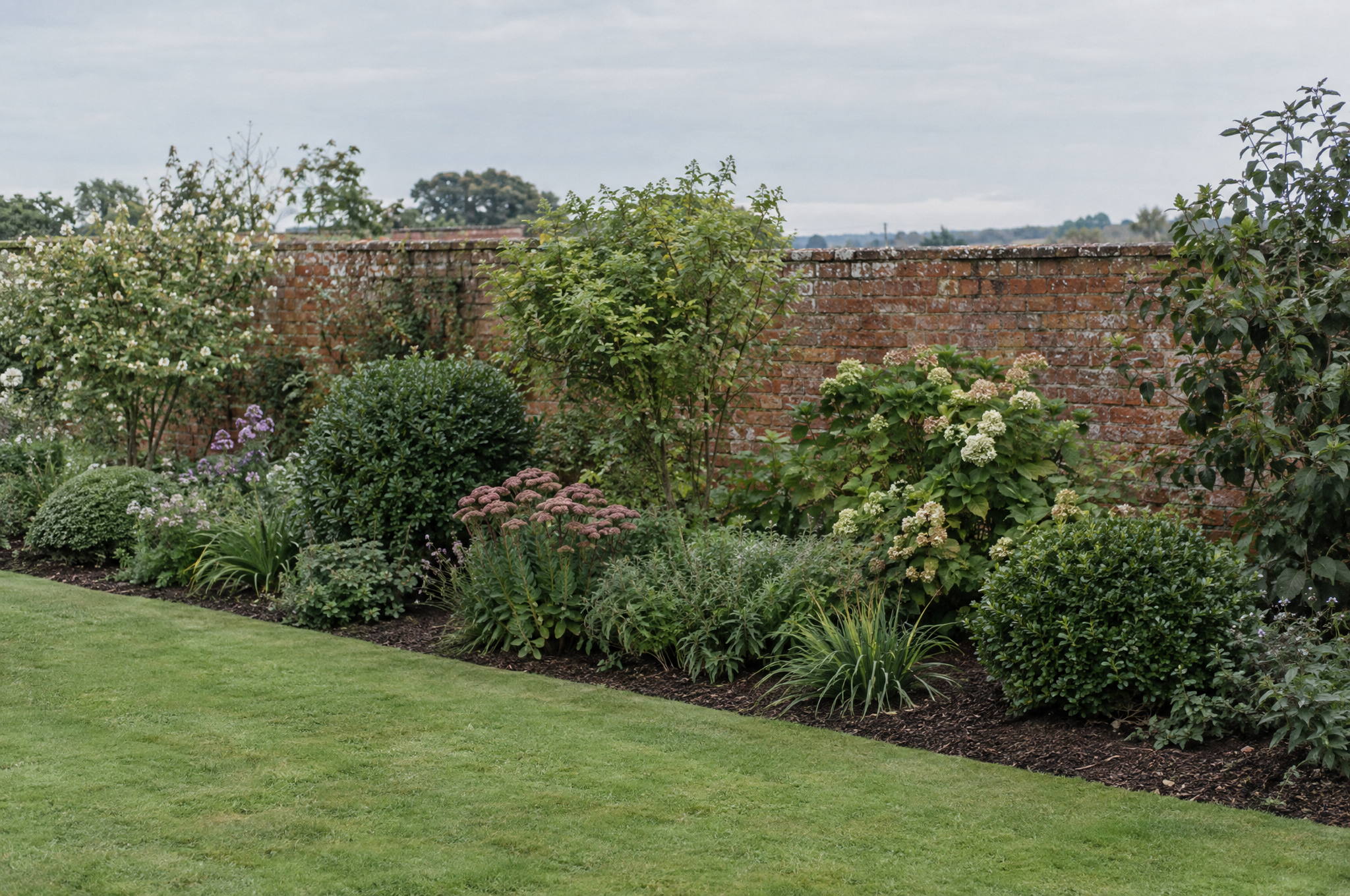
PRUNE
Weeding and PruningConsidered pruning of shrubs, roses, climbers and small trees, with beds, gravel and paving kept clean.

CLEAR
Seasonal Tidy UpsSpring resets, a midsummer garden tidy up and a pre winter tuck up for gardens that do not need a full round.
RESTORE
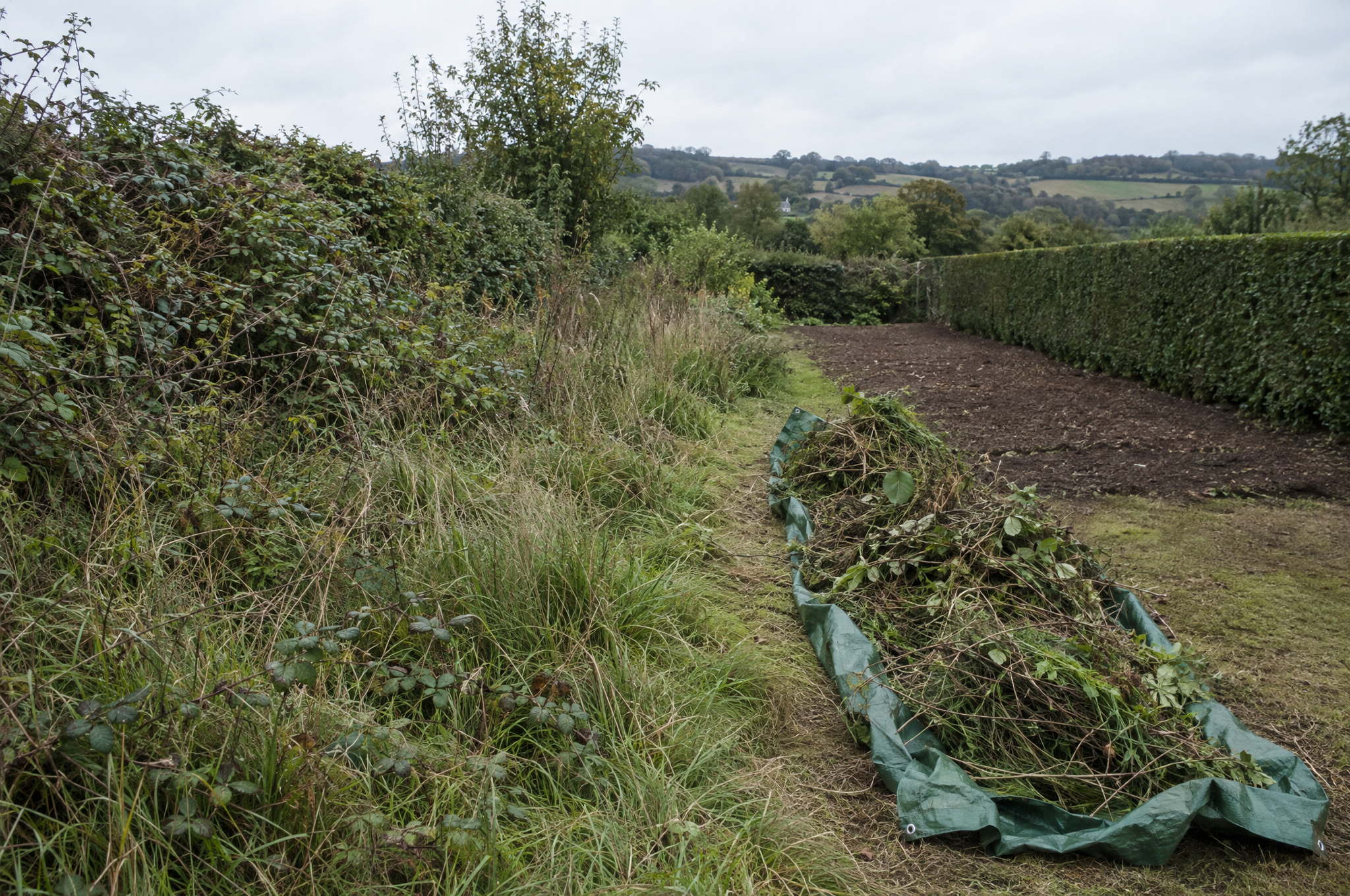
Garden Clean UpsOne off garden clearance and restoration of overgrown gardens, brought back into good order calmly and at your pace.

TEND
Pond MaintenanceRoutine pond care and pond cleaning, koi welfare, filter and pump checks, planting work and wildlife safe treatment.

WASH
Jet WashingCareful jet washing of patios, paths, driveways and stonework, with the pressure matched to the surface.
Enquiries are read in person, by Elliott. A few lines about the garden, the kind of work you have in mind and roughly where you are in Suffolk is all we need to start. Where it makes sense, we will arrange a quiet visit to look round the garden and talk it through.