Careful jet washing of patios, paths, driveways and stonework, with the pressure matched to the surface.
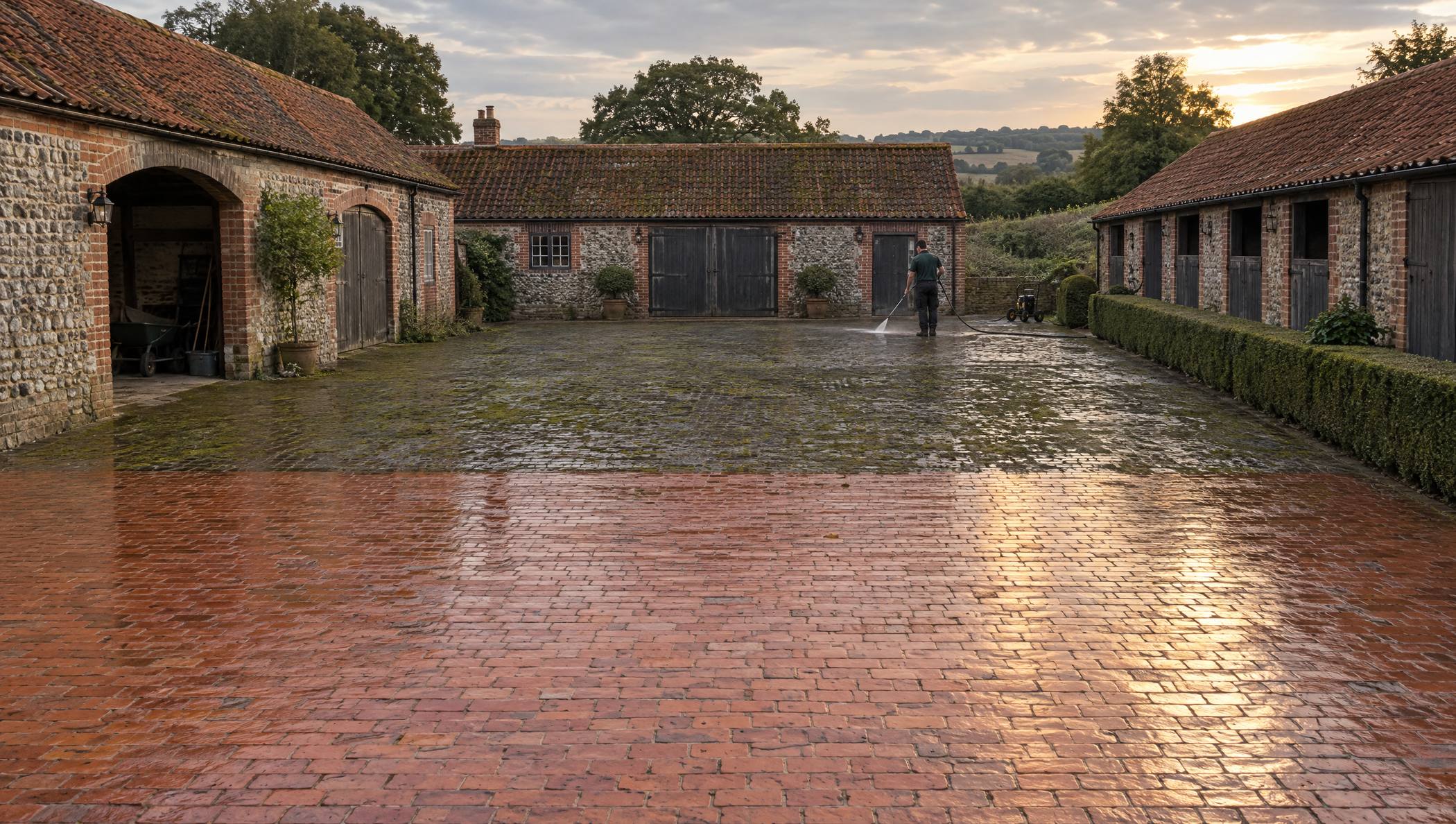
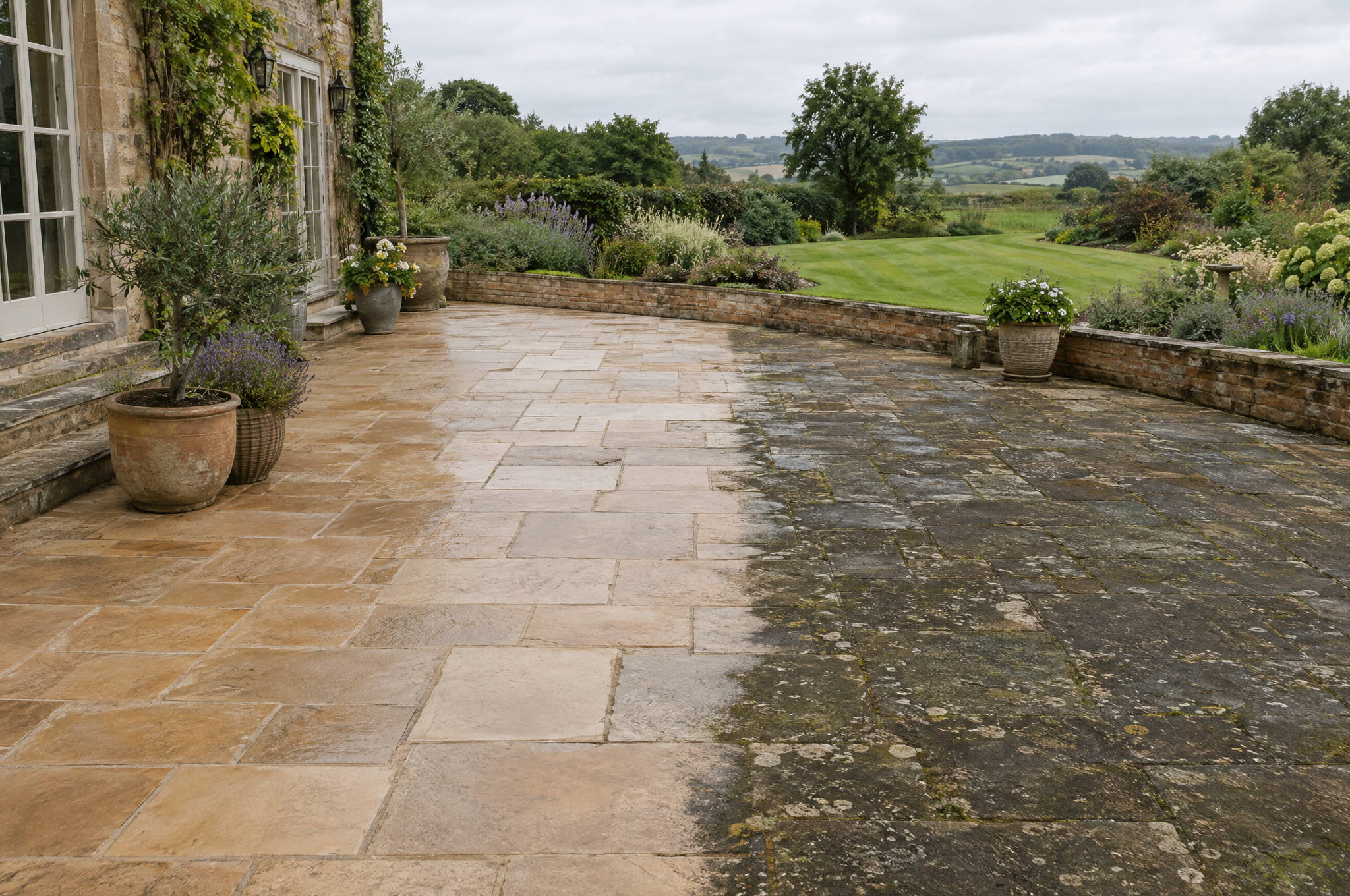
Most jet washing jobs are patios, paths and terraces that have weathered slowly. Stone, brick and concrete pavers gather moss, algae, leaf rot, lichen and the slow dirt that comes from being outdoors. A controlled wash lifts all of it back to the original surface, often surprisingly cleanly given how dirty things had become.
We also wash garden walls, low stonework, raised beds, garden steps, and the edges of paths and drives where moss has crept across. For larger drives or commercial scale areas, the work is staged across a session or two depending on the area, so the surface has time to dry between sections and the job is finished cleanly.
The tool makes most of the difference to how a finished patio looks. A rotary surface cleaner covers paving evenly and leaves no lines, where a lance waved by hand at close range leaves the zebra striping you can see on half the drives in the county, and which cannot be tidied up afterwards except by washing the whole area again properly. A fan tip is used rather than a pencil jet, kept moving, held at a consistent distance, with every pass overlapped so the tone comes out even from one side of the terrace to the other.
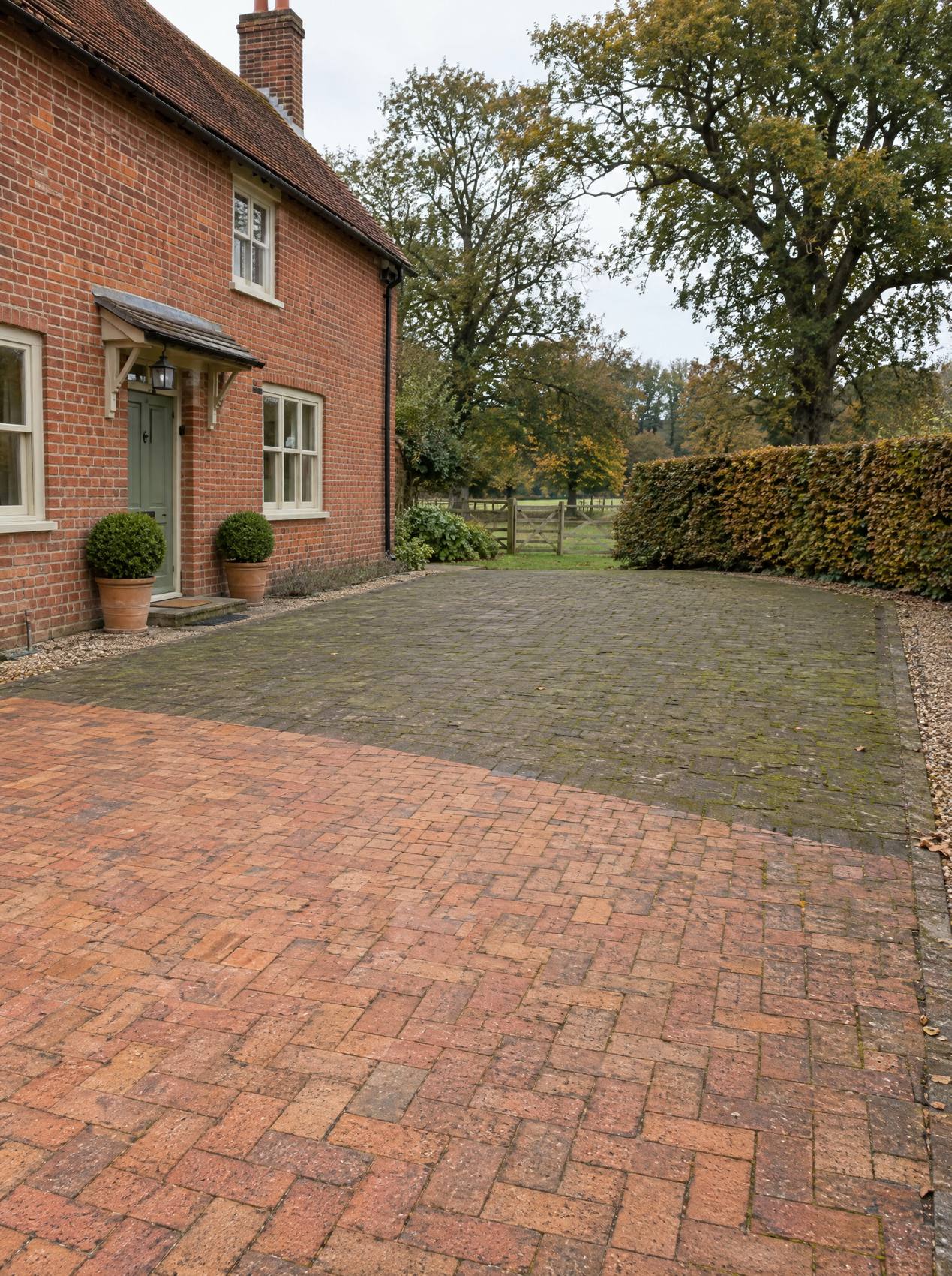
Driveway cleaning is the other half of the work and behaves quite differently from a patio. A block paved drive holds dirt in its joints as much as on its faces, so the wash lifts the jointing sand along with the moss and the drive has to be rejointed with fresh kiln dried sand afterwards or the blocks begin to rock and the weeds return faster than they left. Tarmac and resin bound surfaces take a much gentler approach again, since too much pressure will strip the binder and leave a patch that never matches. Gravel drives are not washed at all; they are raked, weeded and topped up, which is a different job worth naming rather than quoting for.
Oil marks, tyre scuffing and the green film that forms on a north facing drive all respond to different treatment, and a wash alone does not lift any of them completely. Oil wants a degreaser and time to work before the pressure goes anywhere near it. Lichen, the tough black spots that look burned into old stone, has to be treated rather than blasted, since the pressure needed to remove it mechanically will take the surface of the stone with it. These are worth setting expectations about at the quote rather than at the end of the day.
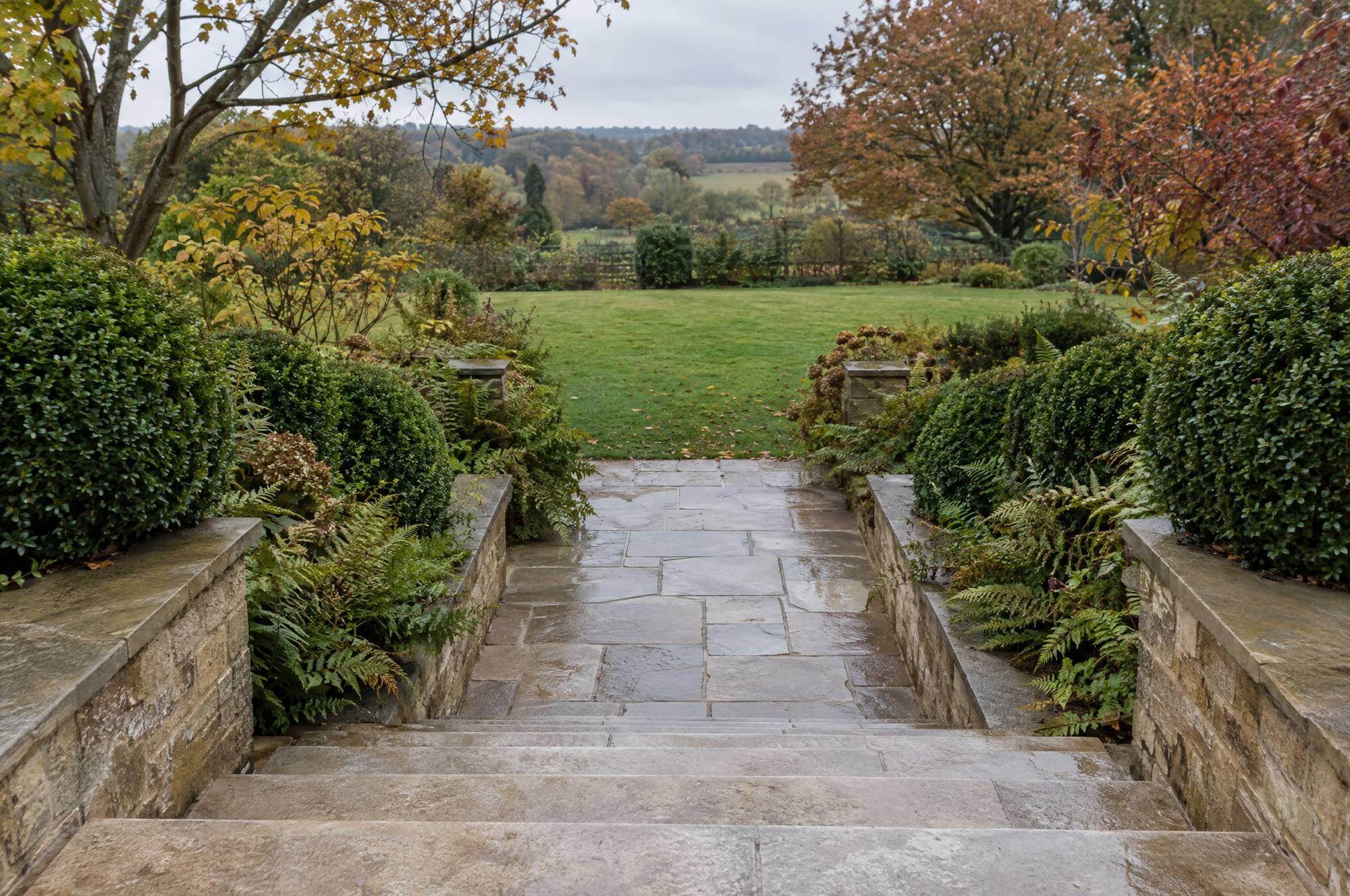
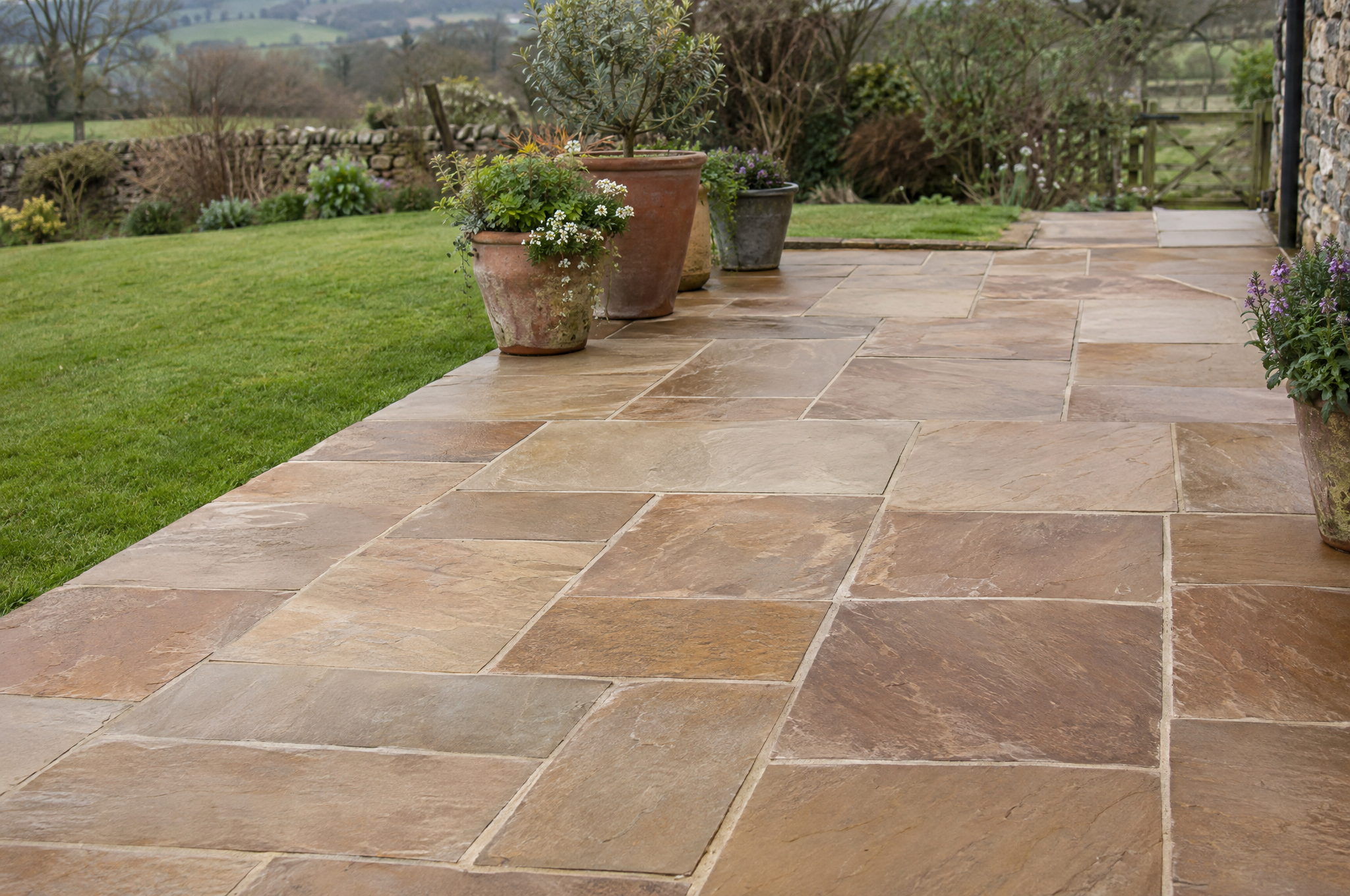
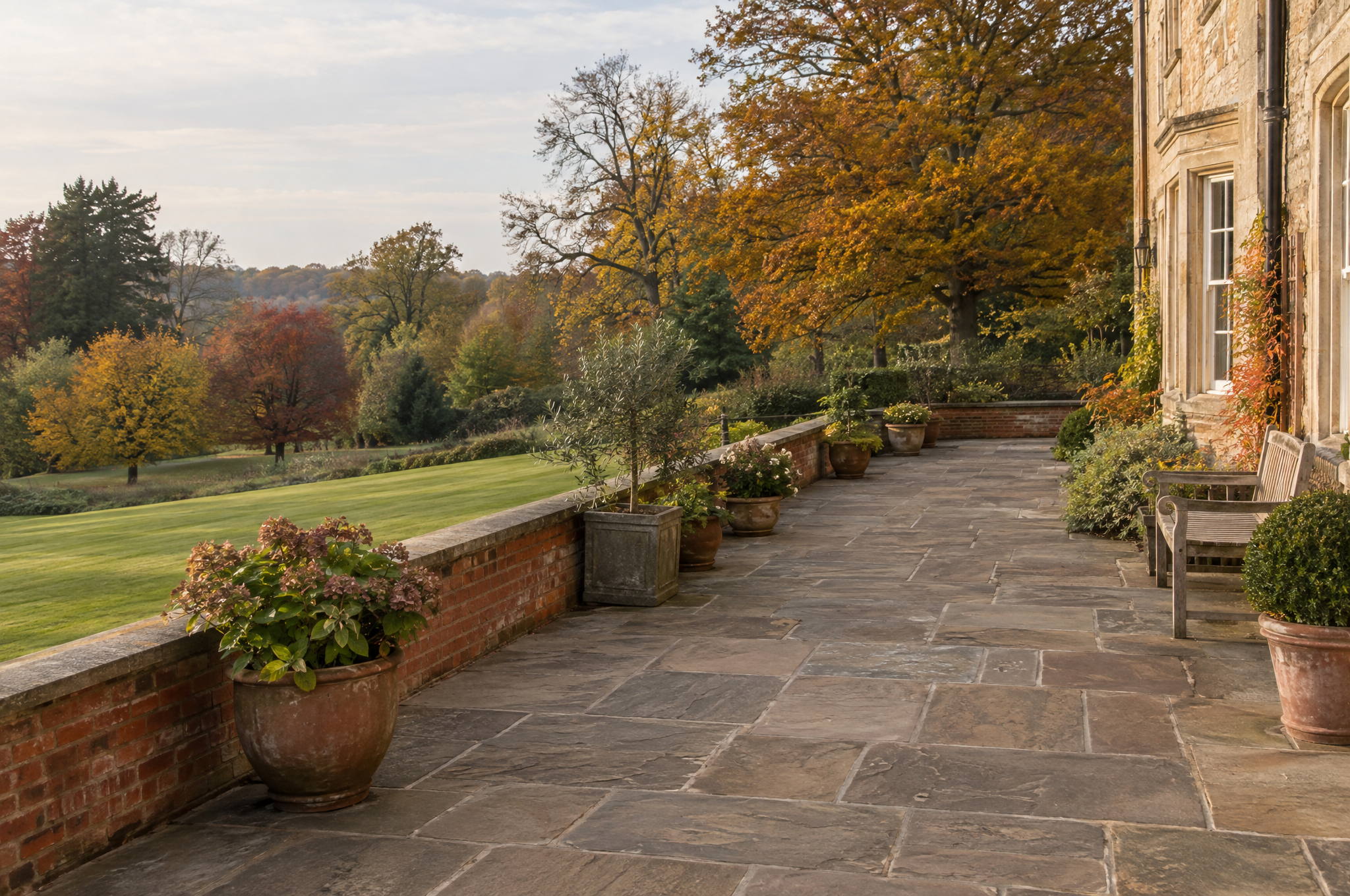
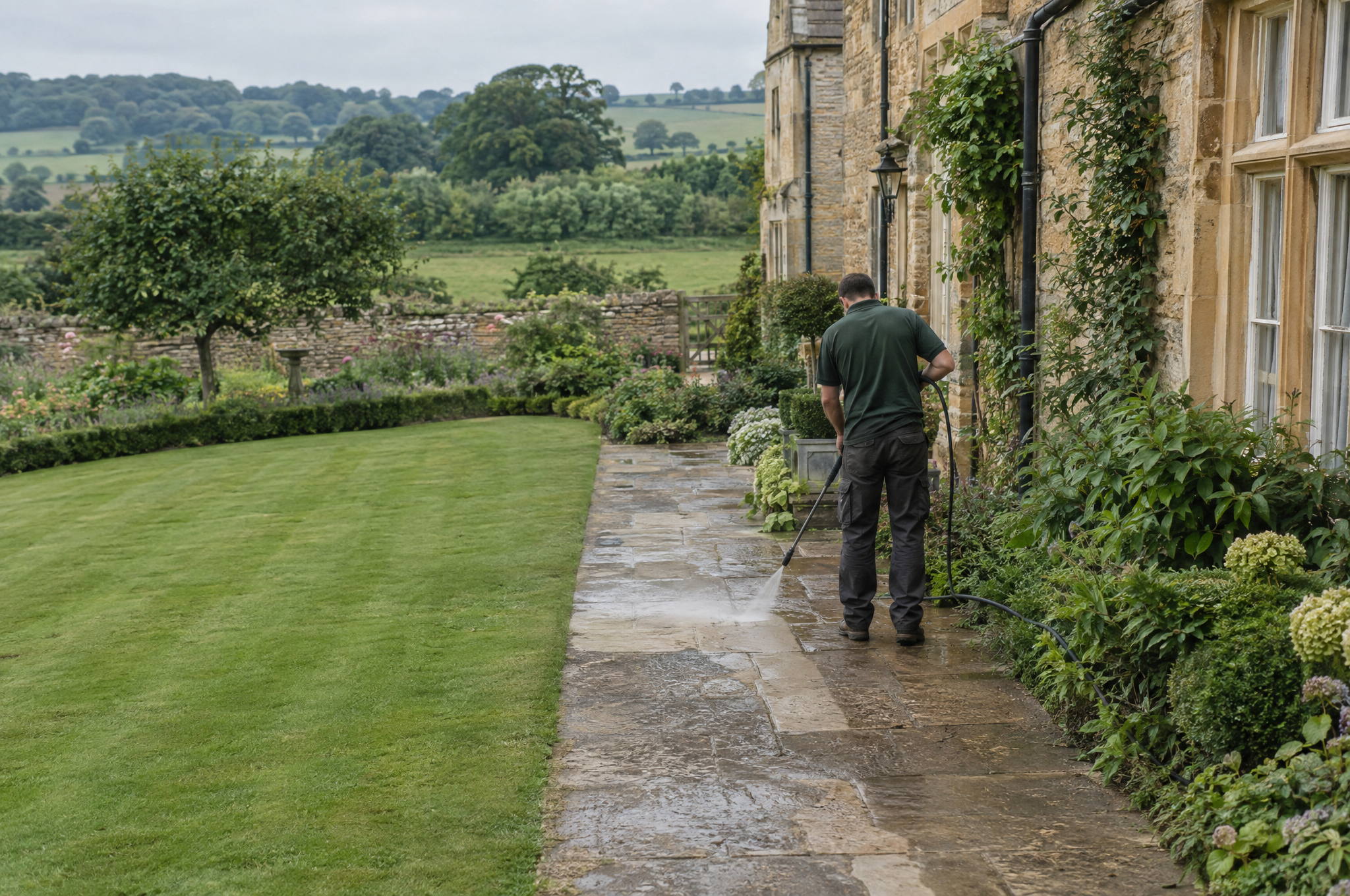
Different surfaces want different pressures. Old York stone and softer paving stones will damage under the pressure that modern porcelain handles fine, and concrete needs a different approach again. We start at a lower pressure and work up to what the surface wants, never higher than necessary to clean it.
The run off is directed to drains rather than across borders or over lawns, so the work does not flood beds with dirty water. Plants close to the working area are watered down before and after to protect them. When the job is finished, the surrounding garden is left as we found it, not strewn with debris from the wash.
Some surfaces need judgement rather than power. Indian sandstone is soft and will pit and flake if it is pushed too hard. Older slabs bedded on lime or a weak sand and cement mix can have their pointing blown clean out, so joints are checked before we start and raked out and repointed as separate work where they have already gone. Block paving loses its kiln dried sand during the wash, which has to go back in afterwards or the blocks work loose and the weeds return faster than they did before. Timber decking takes a very low pressure along the grain, or the boards fur up and never look right again.
Preparation protects the rest of the garden. Gullies and drains are checked first so silt cannot back up into them, silt is swept off rather than flushed into a soakaway, planting near the working area is watered down before and after, and furniture and pots go back where they came from. What should be left behind is an even surface with no lance lines, joints intact, no silt film showing once the stone has dried, and borders that look as though nothing happened beside them.
Sealing is the question that follows most patio cleaning jobs, and the honest answer is that it depends on the stone. A good sealant on porous sandstone or concrete slows the return of algae, makes the next clean easier and can deepen the colour, which some people like and some very much do not. On dense porcelain it achieves almost nothing. On old York stone it can trap moisture and do more harm than good. Where sealing is worth doing, the surface has to be genuinely dry first, which in practice means several settled days after the wash and is the main reason the work belongs in spring or early autumn rather than November.
A couple of things are worth agreeing before the day rather than after it. A neighbouring wall, fence or parked car that will take the overspray is covered, and where a boundary is shared the wash is timed so it is not being done over someone else's washing line. Access to an outside tap and somewhere sensible to stand the machine matter more than people expect, since a long hose run costs pressure and a long lance run costs control.
Most jet washing is requested before something. A summer party, a family gathering, a property viewing, or simply the start of a season people will spend in the garden. Worth booking a few weeks in advance to secure a slot at the right time of year. Once washed, a patio looks far better for far longer than people often expect.
Spring and early autumn suit the work best. Mild settled weather gives a surface time to dry properly, which matters a great deal if anything is going to be sealed afterwards, and makes it much easier to see what has genuinely come up. An autumn wash also takes off the algae that turns paving into a skating rink over the winter, which is usually the point at which people wish they had thought about it back in September.
A wash lifts what is sitting on the surface, and algae and lichen regrow from spores carried in the air, so their return is a question of when rather than whether. Where it is useful, and where it is safe alongside the planting and any pets using the garden, an after treatment slows that considerably and can buy another season before the next wash. Quotes are given clearly in writing in advance, sized to the area and the surface.
Areas are measured and quoted in writing in advance rather than priced by the hour, so you know the cost before the machine comes off the van. Larger drives and terraces are staged across two sessions where that produces a better finish, with the split and the cost set out at the quote. The run up to summer books out earliest, so April is generally worth thinking about in February.
Hard surfaces rarely get filthy on their own, which is why the work sits so naturally alongside everything else. Where a whole garden has been left to go over, the terrace is usually only one item on a longer list and belongs inside a garden clearance, priced as part of the project. Where the garden is looked after regularly, a garden care round keeps paths, steps and paving swept and clear visit by visit, which is what stops a patio reaching the state that needs a wash in the first place.
Paving does not go green overnight. It happens over two or three unnoticed autumns, and by the time a patio is properly slippery the job has turned from a sweep into a wash. Gardens that are looked after right through the year rarely get that far, because the leaves come off the stone before they rot into it and the moss along the joints is dealt with while it is still a nuisance rather than a surface.
Four Seasons Garden Care is our ongoing garden care programme, and the routine presentation of paths, steps, terraces and patios sits naturally within it: swept, cleared and kept in order visit by visit as part of how the garden is managed. A full wash remains its own piece of work, planned and quoted separately for the point in the year when it will do the most good.
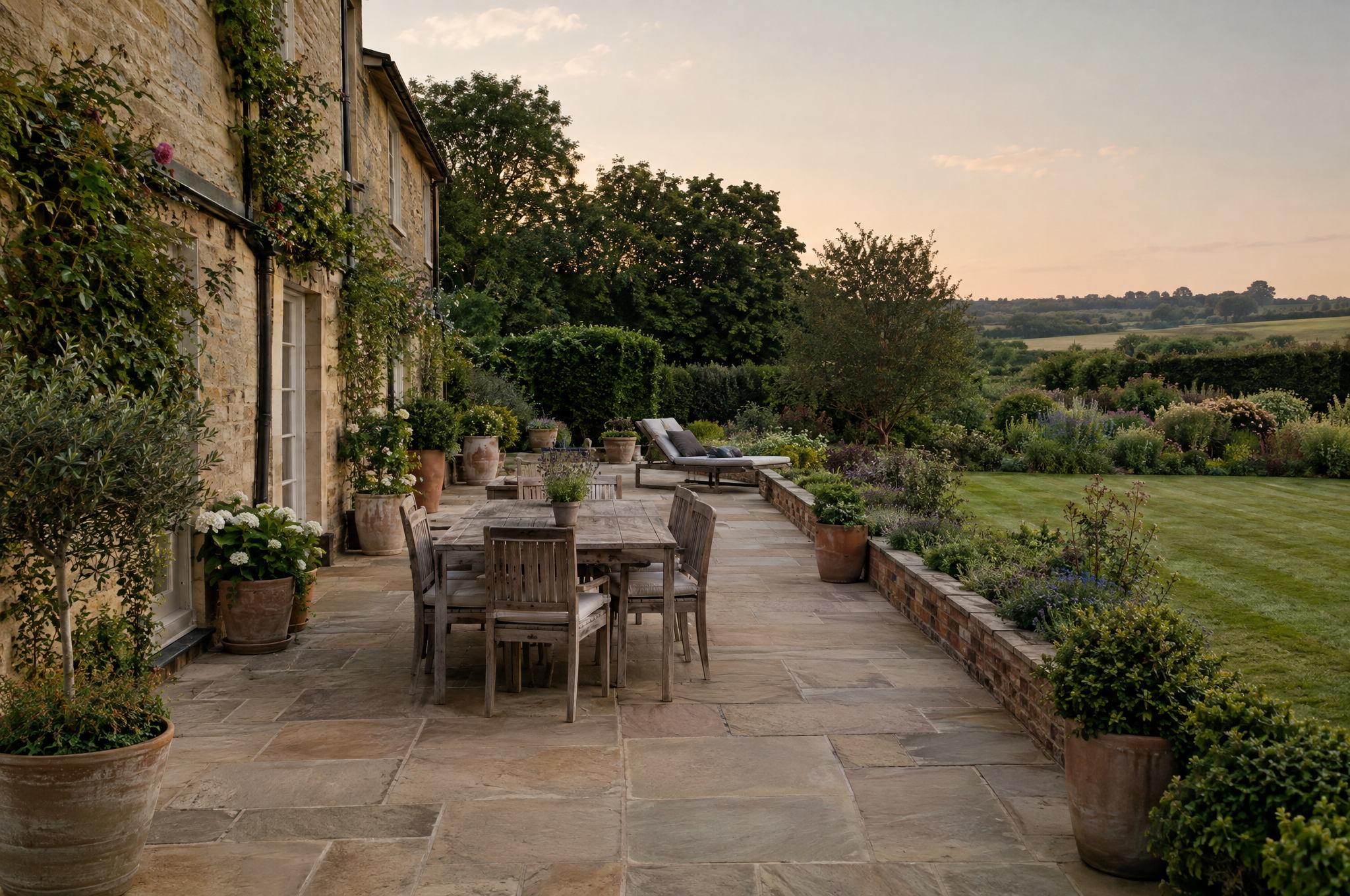
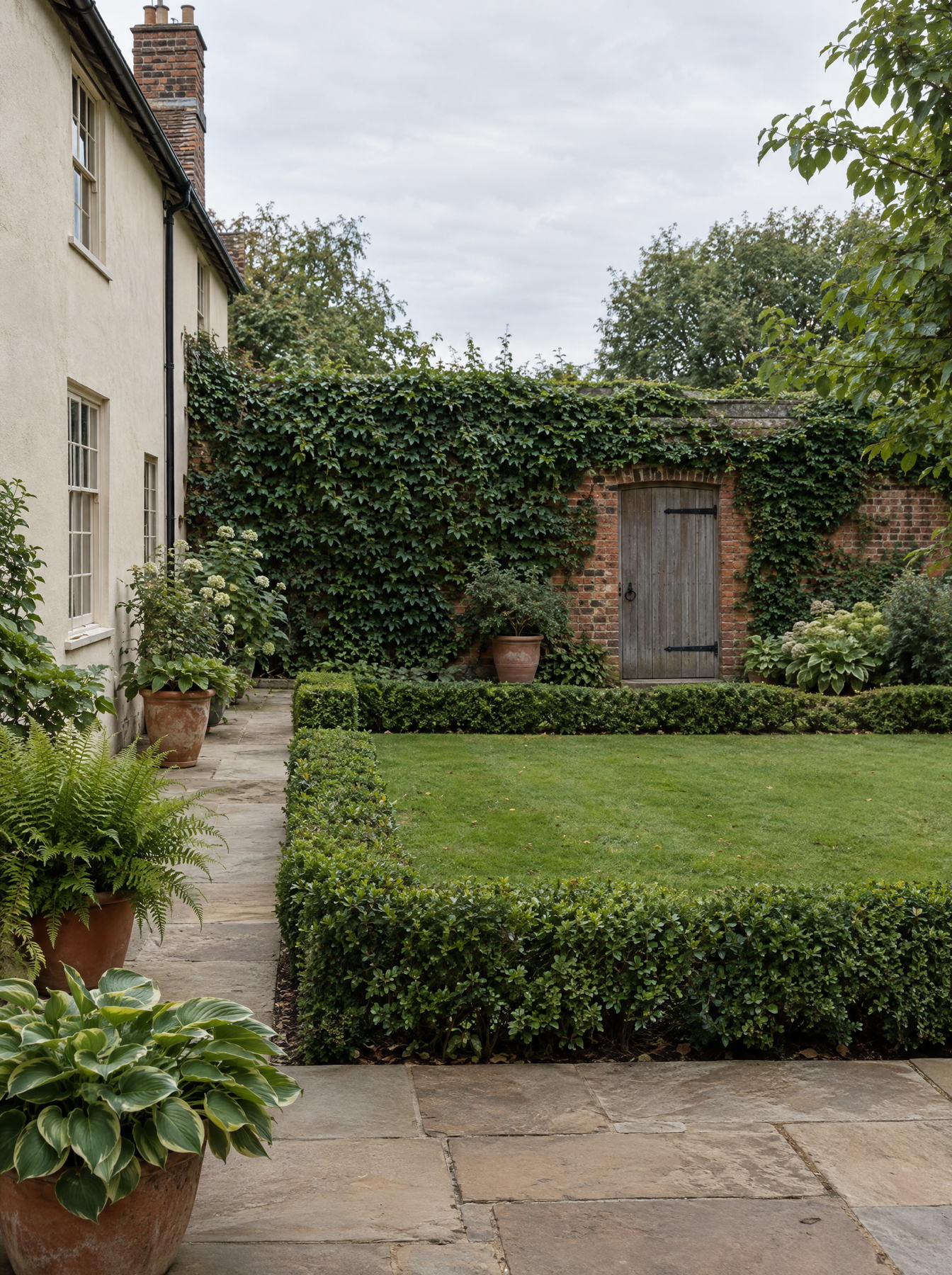
Suffolk Garden Maintenance covers the wider set of jobs that keep a country garden in good order through the year. Regular lawn cuts and crisp edging, careful weeding and considered pruning, seasonal tidy ups, the occasional one off restoration of an overgrown plot, pond cleaning and treatment, and jet washing of patios and paths.
CARE
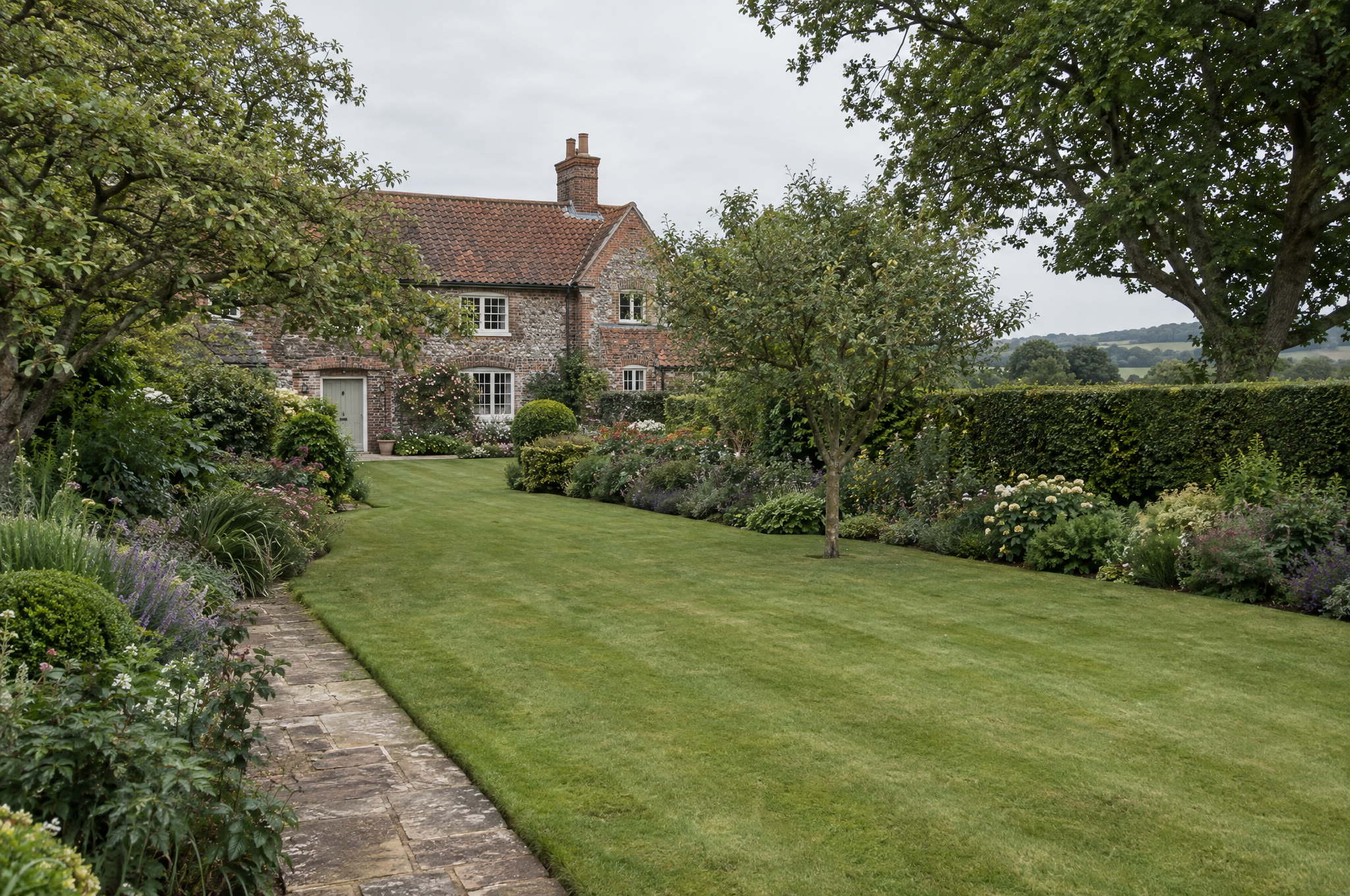
Garden CareA regular garden care round looking after the whole garden, with grass cutting, edges and beds kept calmly in good order season after season.
CUT
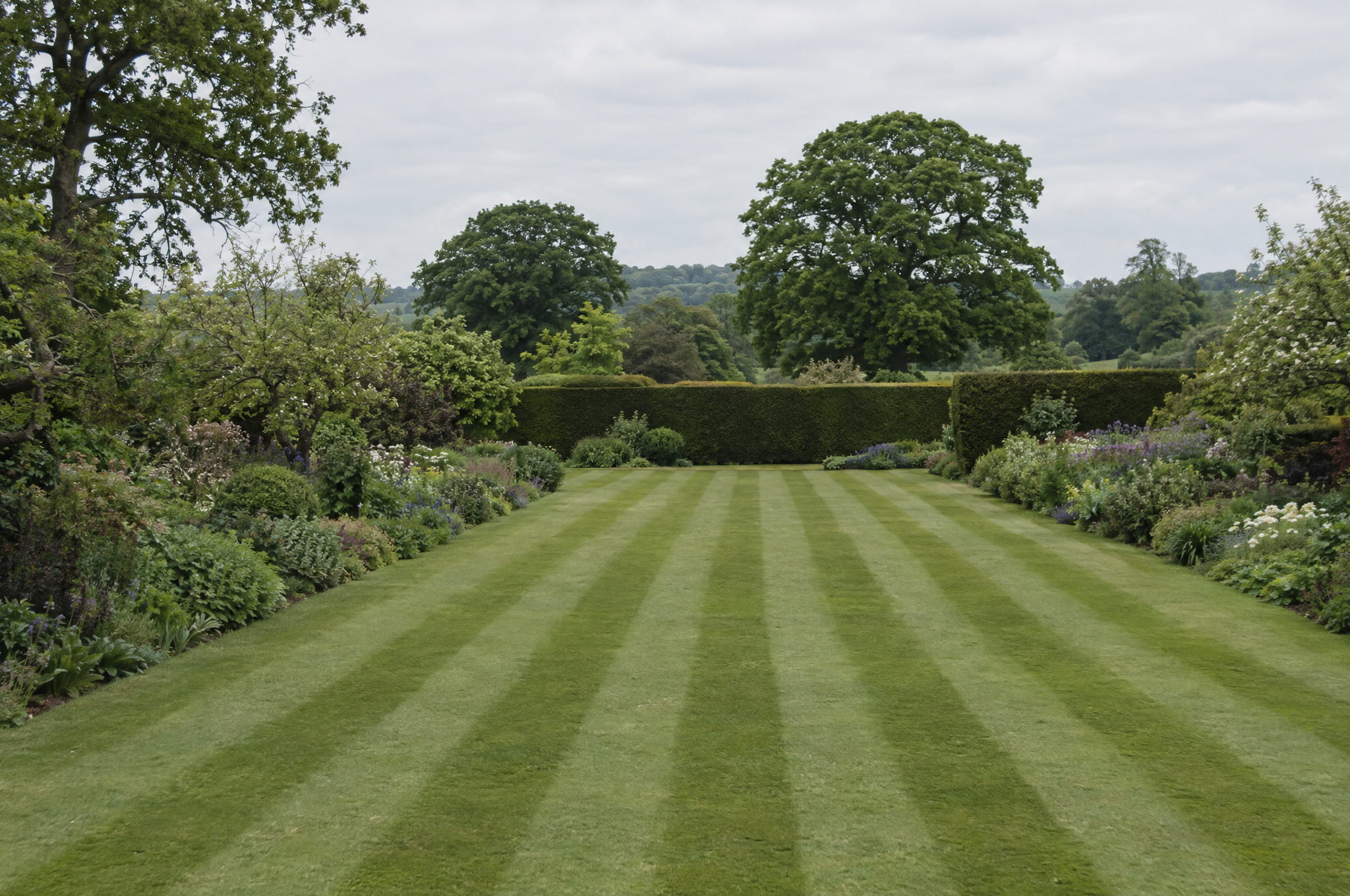
Lawn CutsWeekly and fortnightly mowing rounds on a fixed day, with crisp edges, even stripes and every clipping cleared.
SHAPE
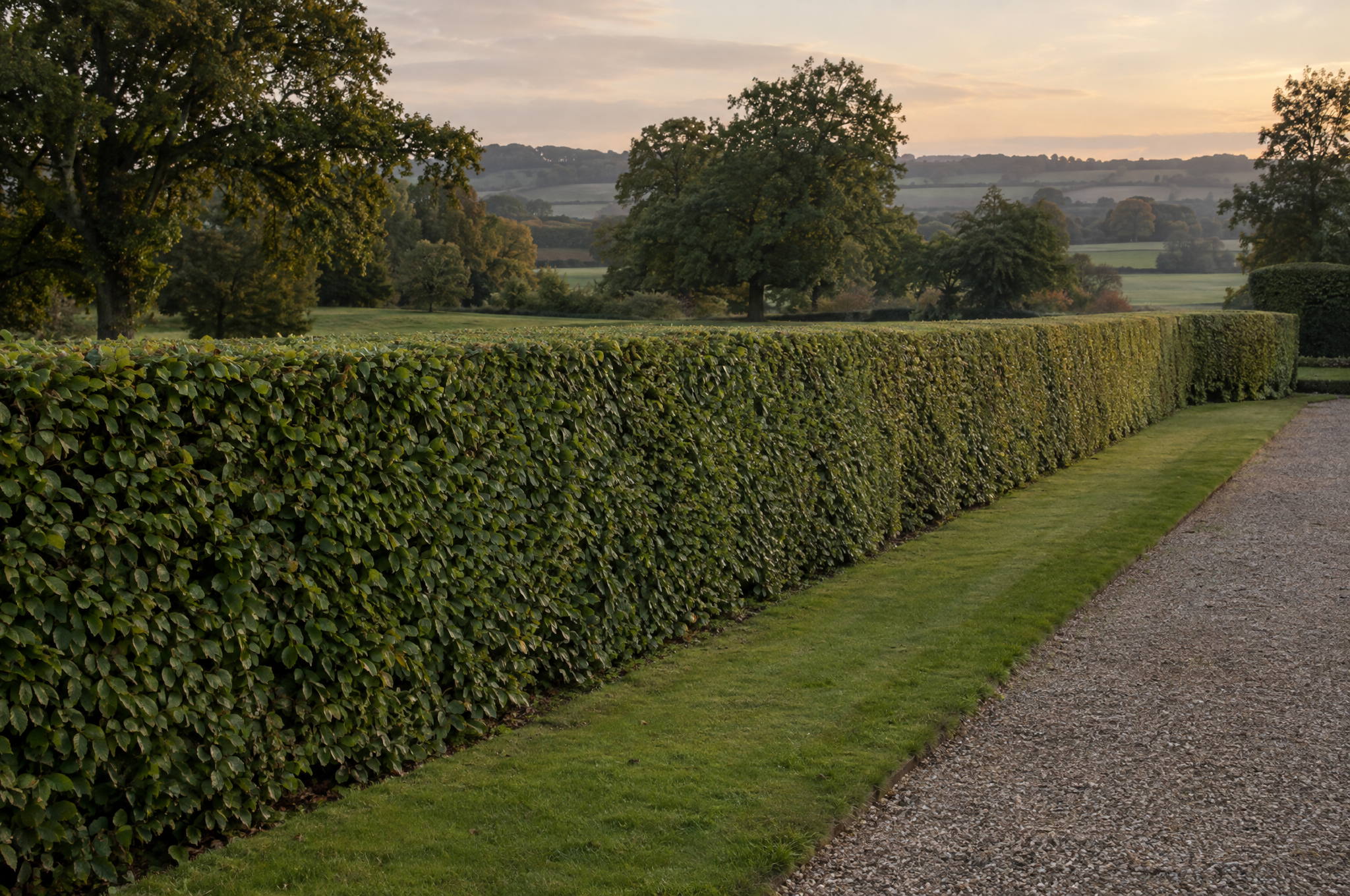
Hedge TrimmingEven cuts and careful shaping for boundary hedges, formal yew, beech, hornbeam, hawthorn and feature shrubs.
PRUNE
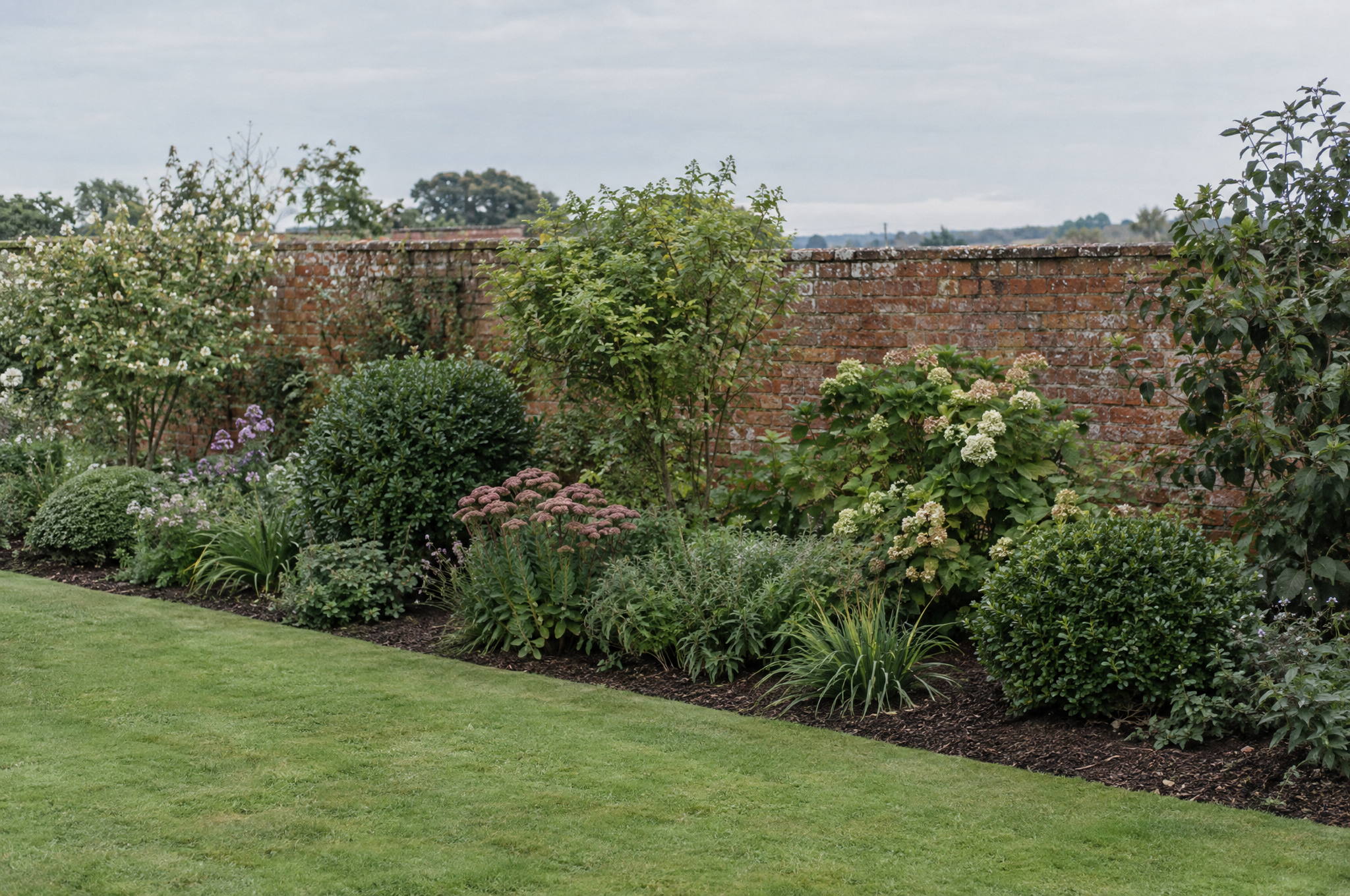
Weeding and PruningConsidered pruning of shrubs, roses, climbers and small trees, with beds, gravel and paving kept clean.
CLEAR
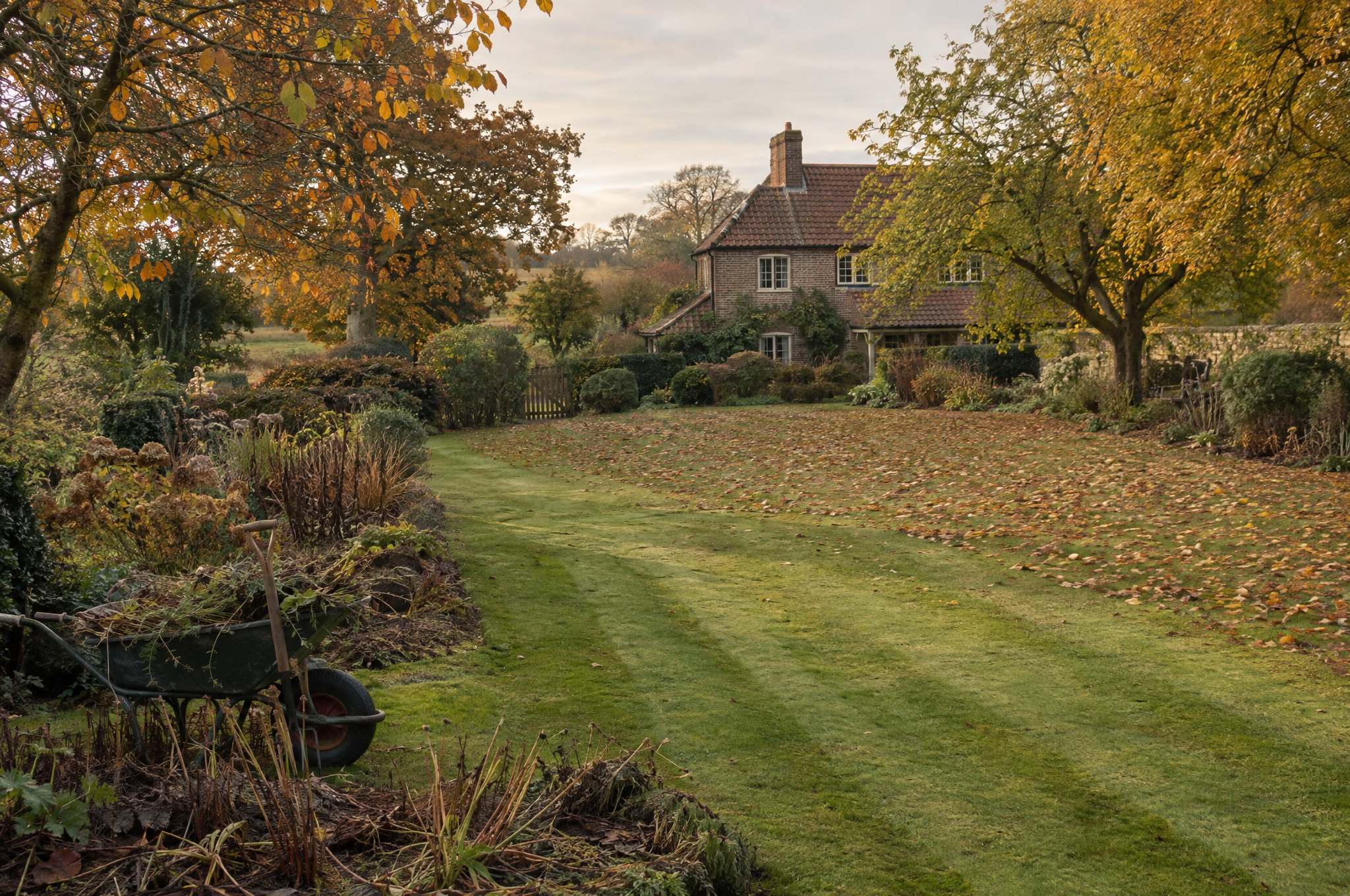
Seasonal Tidy UpsSpring resets, a midsummer garden tidy up and a pre winter tuck up for gardens that do not need a full round.
RESTORE
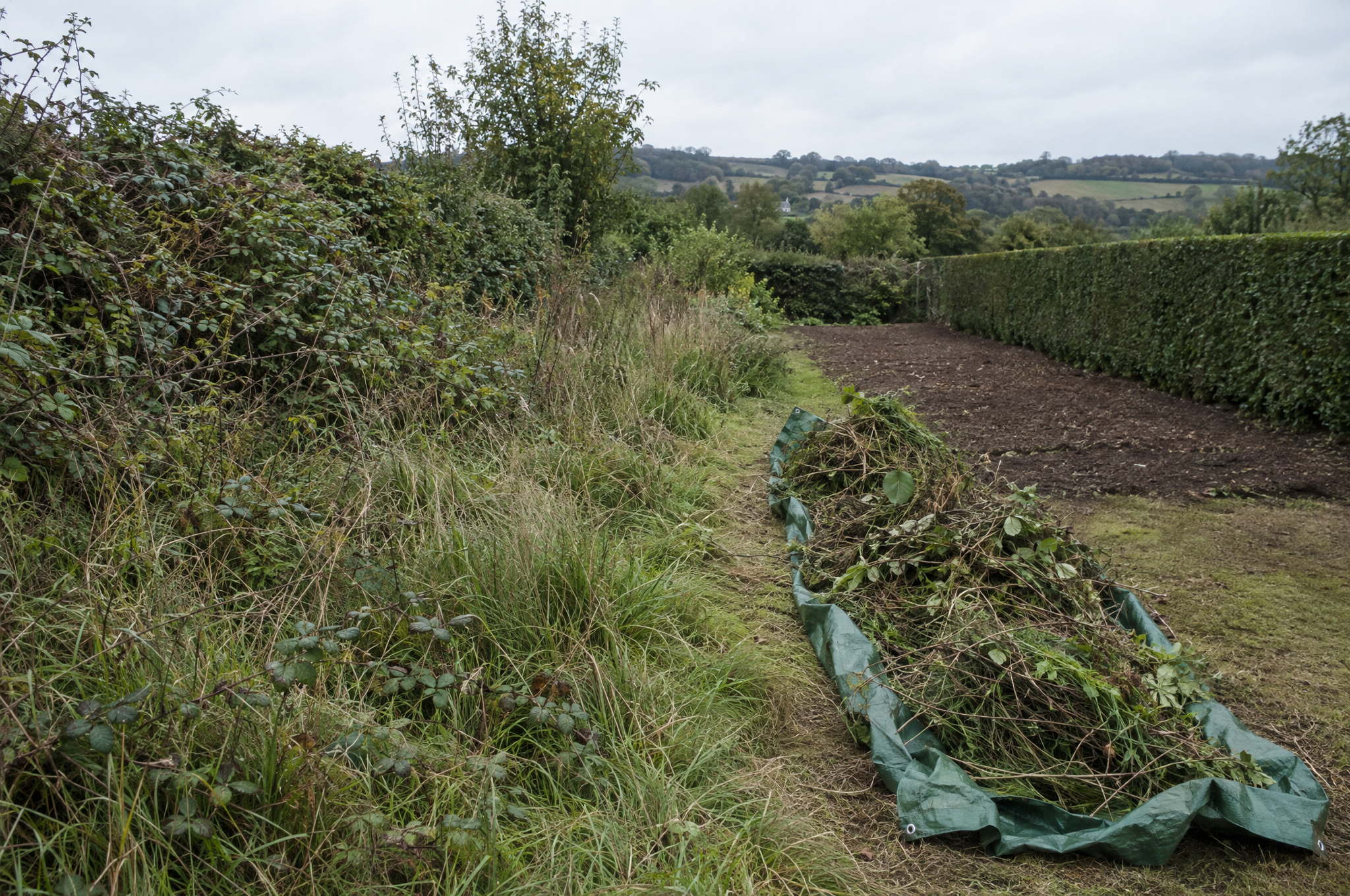
Garden Clean UpsOne off garden clearance and restoration of overgrown gardens, brought back into good order calmly and at your pace.
TEND
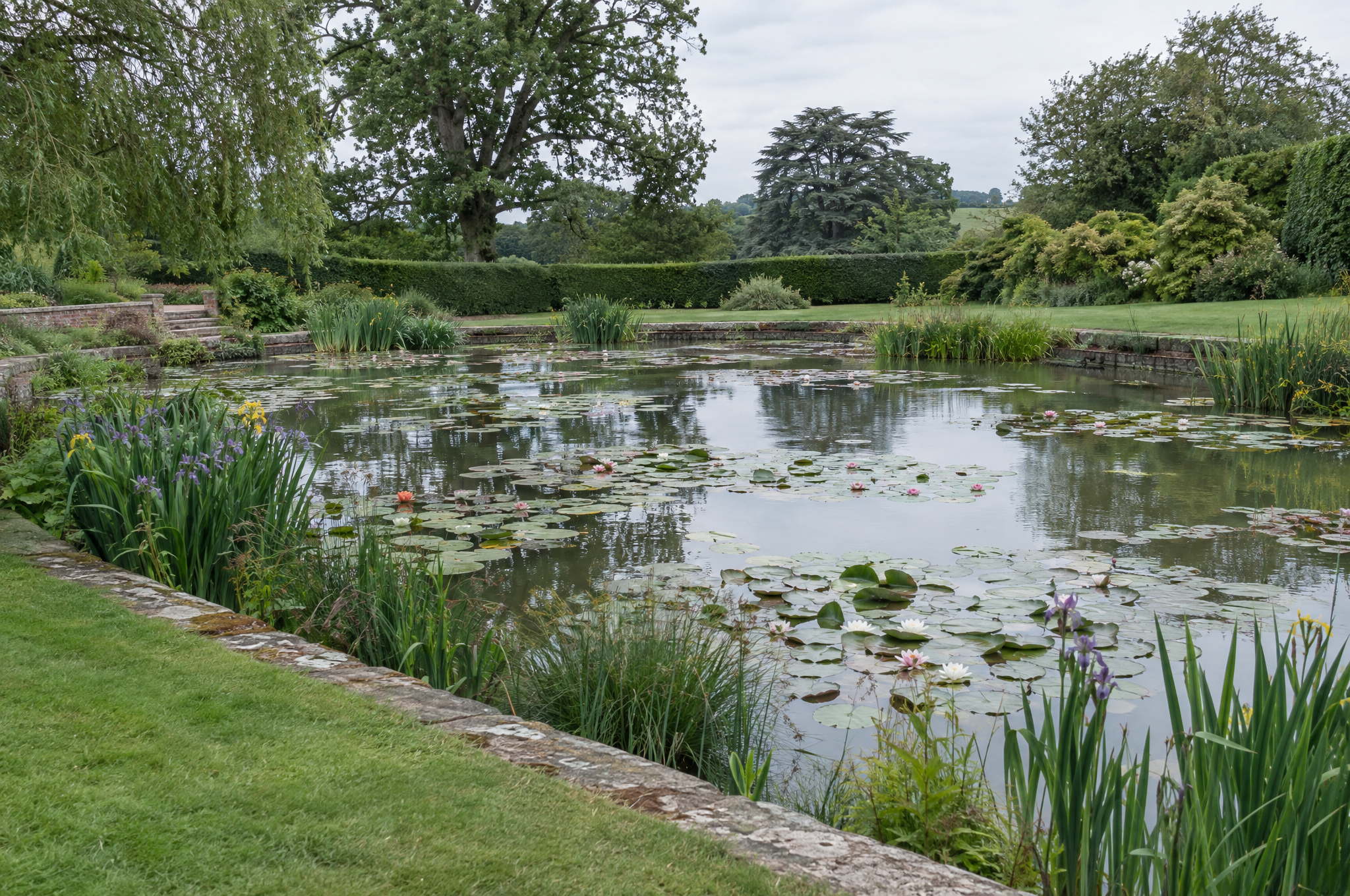
Pond MaintenanceRoutine pond care and pond cleaning, koi welfare, filter and pump checks, planting work and wildlife safe treatment.
Enquiries are read in person, by Elliott. A few lines about the garden, the kind of work you have in mind and roughly where you are in Suffolk is all we need to start. Where it makes sense, we will arrange a quiet visit to look round the garden and talk it through.