Weekly and fortnightly mowing rounds on a fixed day, with crisp edges, even stripes and every clipping cleared.
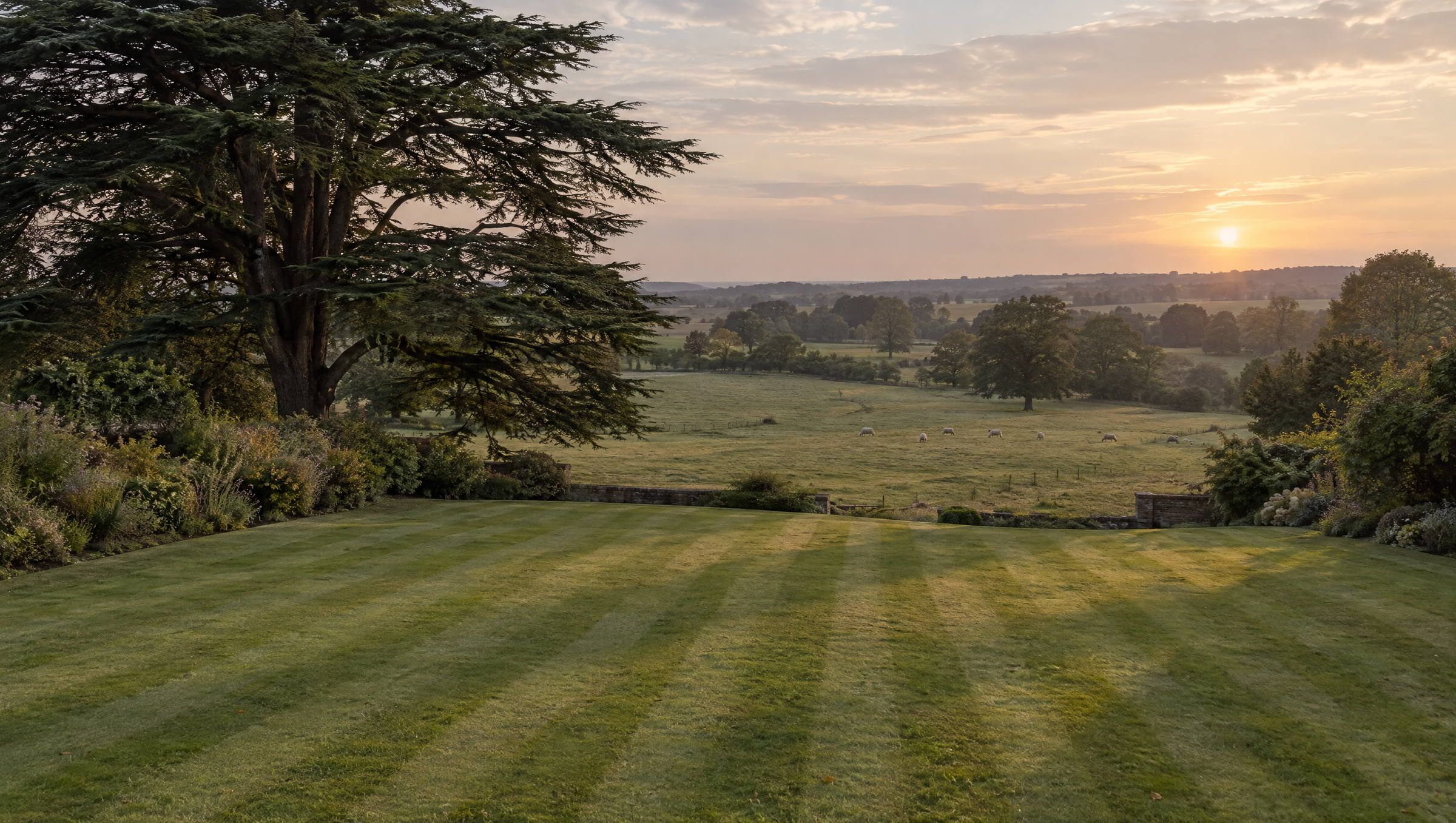
A standard Lawn Cut visit covers the mow, the edges, and the clear up. The grass is cut to a height that suits the season, with the mower kept sharp so the blades cut cleanly rather than tearing, which keeps the lawn looking crisp for longer between visits. Stripes are set where the lawn allows, with the direction alternated week to week so the grass is not pushed in the same direction every time.
Edges are then redrawn cleanly along borders, paths and stonework using a half moon edger or strimmer depending on the line, so the lawn meets the rest of the garden in a defined line rather than blurring into the borders. Clippings are collected and taken away as standard, leaving no piles, no bagged green waste at the gate, and no scattering on the paths.
Around the mow, the finish is what people actually notice. Hard edges against paving and stonework are run over so the grass cannot creep across the line. The trimmer is kept level rather than dropped into the soil, which is what causes the scalped brown collars you see around trees and posts. Paths and drives are swept or blown clear at the end, and the lawn is left looking deliberate rather than simply shortened.
Lawn Cuts covers domestic lawns of most shapes and sizes, from a courtyard square of grass to the long open sweeps that come with a country property. Ride on mowing is used where the area genuinely calls for it, and pedestrian machines everywhere else, because a heavy machine on a small or soft lawn does more harm to the surface than the time it saves is worth. Orchard grass, paddock edges and rougher areas are cut on their own schedule, higher and less often, which is what they want.
The awkward parts of a lawn are where most grass cutting falls down. Banks and slopes are taken across rather than up and down, which is both safer and a good deal more even. Narrow strips between borders are cut in the direction that lets the mower finish cleanly rather than the direction that is quickest, because a lawn is read from the house and the lines show. Around manhole covers, tree bases and the feet of steps the finish is made by hand where a machine would leave a scar.
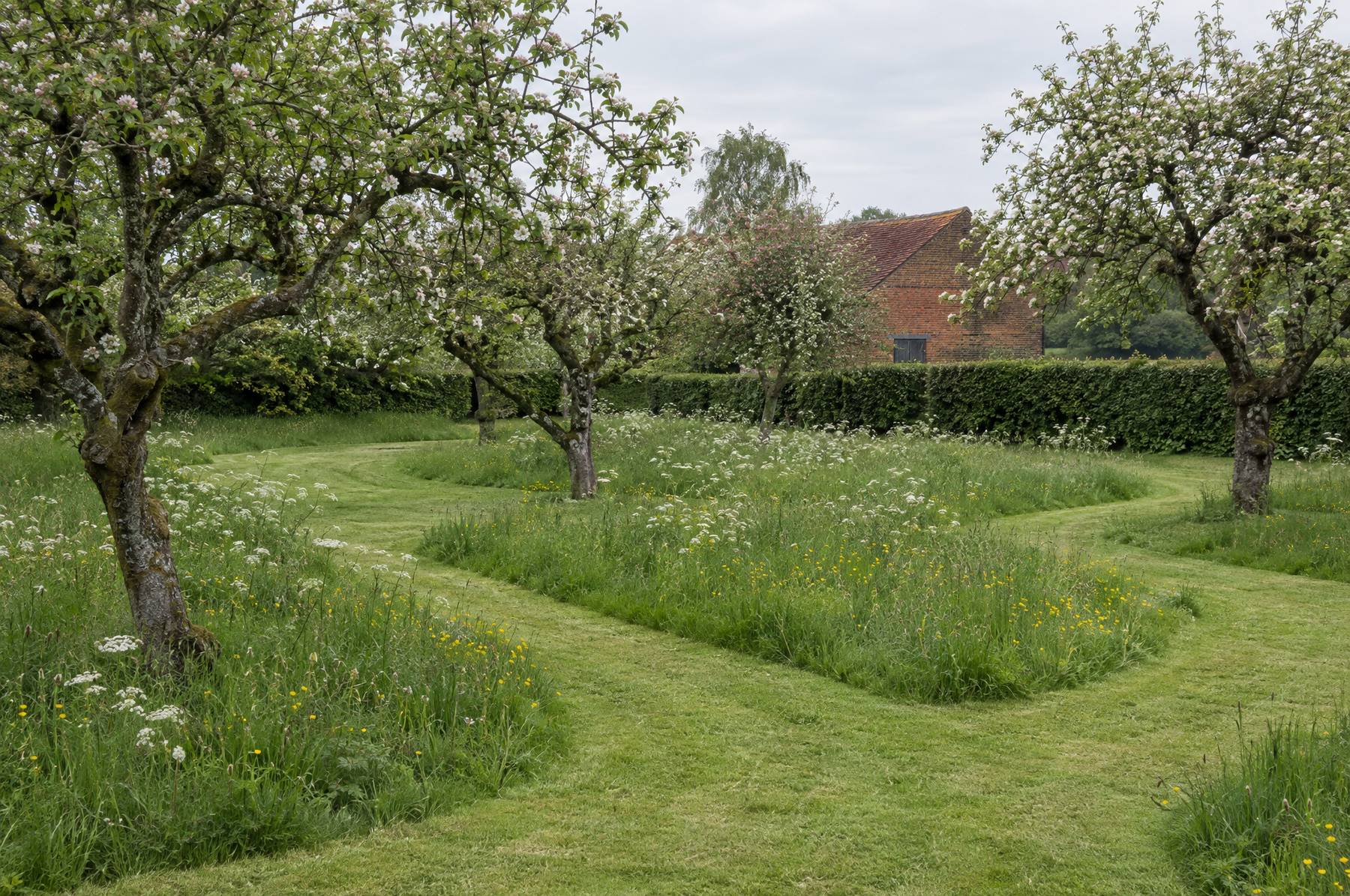
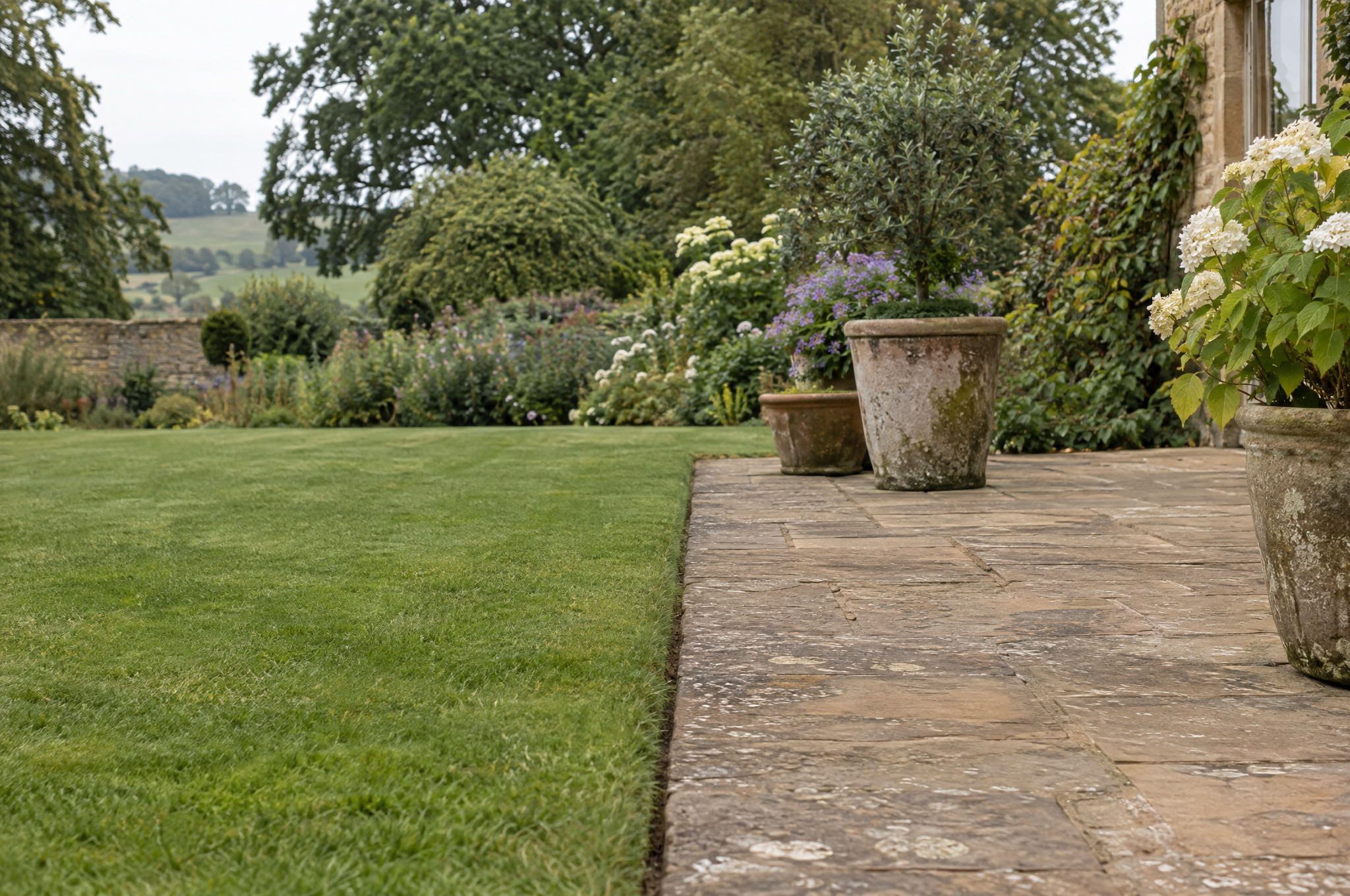
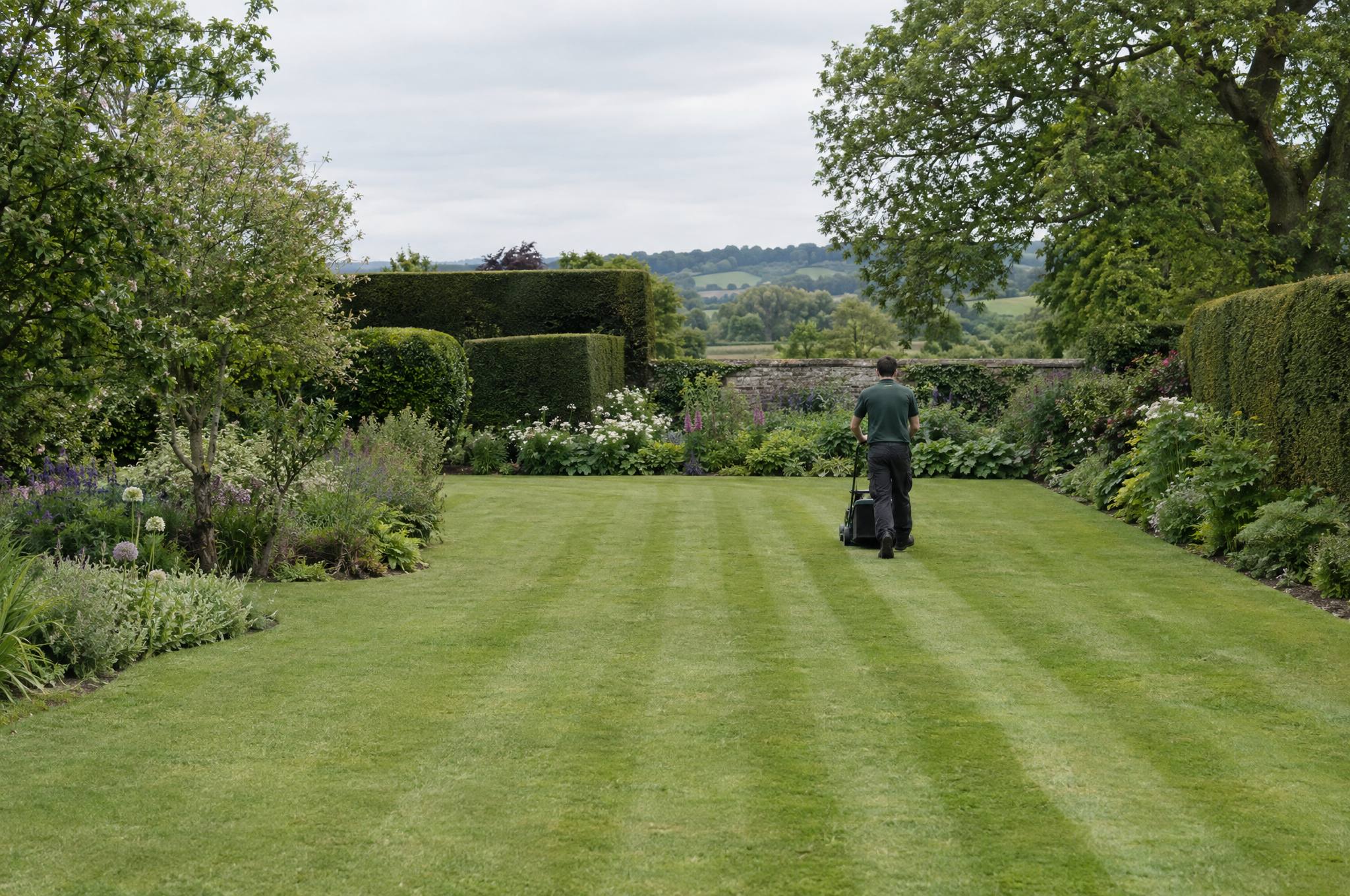
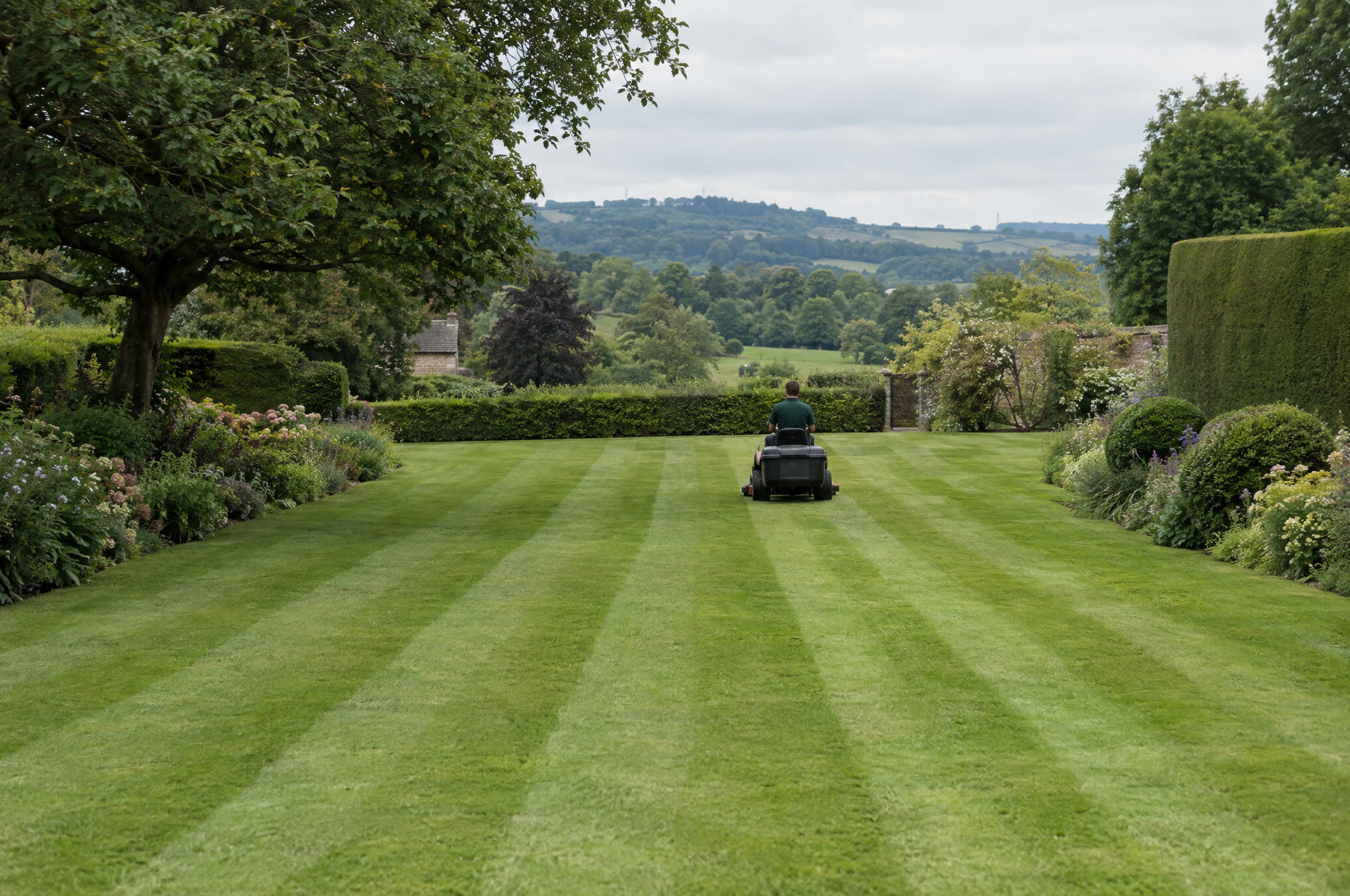
A good lawn is the result of small things done consistently. The mower is sharpened regularly so the cut is clean, which is why a properly cut lawn keeps its colour and stays crisp at the tips for days afterwards while a torn cut goes brown almost immediately. The cutting height is set to suit the season, slightly higher in summer to keep the grass cool and healthy, slightly lower in spring and autumn when growth is steady.
The direction of the cut is alternated week by week. Mowing in the same direction every time leans the grass over and shows ruts in the lawn. Alternating the direction keeps the grass treated evenly and the stripes looking properly square. Edges are kept tight, paths are cleared, and the lawn is left looking as if a steady hand has just been over it, which it has.
The other half of a good cut is restraint. No more than about a third of the leaf comes off in any one visit, so a lawn that has run away during a wet fortnight is brought back down over two cuts rather than scalped in one. Height sits somewhere around 25 to 40mm for most domestic lawns, raised through high summer so the roots keep some shade, and dropped a little for the tidier cuts of spring and autumn. Cut too short and the grass thins, the roots shorten to match, and moss and weeds move into the space that is left.
Wet ground changes the answer again. Mowing a soaked lawn on Suffolk clay tears more than it cuts, leaves ruts across the surface and compacts the ground underneath, and the clippings clump into wet lumps that smother the sward beneath them. It is almost always better to let the grass dry and take the lawn the next day than to force a cut through standing water.
Stripes are a question of the lawn as much as the mower. A roller machine lays them properly on a reasonably flat, reasonably fine sward, and will do very little on rough orchard grass or on a lawn that is more moss than fescue. That is worth saying honestly at the start rather than letting anyone expect a bowling green from grass that was never going to give one.
Mowing on its own will not fix a struggling lawn, and it is fairer to say so than to keep cutting and hoping. Moss is usually a light, drainage or compaction problem rather than a mowing one. Thin patches under trees are competition for water. A lawn that yellows every July in a dry Suffolk summer is doing exactly what unirrigated grass is supposed to do and will green up again in September. Scarifying, aerating, top dressing and feeding all help in the right circumstances, and each is quoted as its own piece of work with its own timing rather than folded into a mowing visit it would not fit inside.
Most Lawn Cuts are run on a fixed weekly or fortnightly schedule through the growing season, scaled back over autumn and winter as the grass slows. Visits sit on the same day each week so you always know when the lawn is being looked after. Quotes are given clearly in writing in advance, sized to the lawn and the visit frequency.
Aeration, scarifying and feeding are worth doing and are quoted as separate work rather than folded into a mowing visit, because each needs its own timing, equipment and a different amount of time on site.
The schedule matters more than people expect. Weekly cuts through the growing season keep the lawn inside the one third rule comfortably and produce a noticeably better sward by midsummer. Fortnightly works well for lawns that are not pushed hard with feed, and it is the more common arrangement, though there is usually a fortnight in late May when even a well behaved lawn outgrows the gap. Through autumn and winter the visits scale back to occasional cuts and leaf clearance rather than stopping dead, since a lawn left under a wet mat of leaves from November to March comes out of it thin and patchy.
Plenty of clients start with grass cutting and gradually want more of the garden handled. Where the borders and hedges are also getting away, a full garden care round covers the lot on the same visit and usually works out more sensibly than booking each job separately. Where the garden is broadly fine and simply wants resetting at the turn of the season, a seasonal garden tidy up two or three times a year may be all it needs alongside the mowing.
Mowing is the job most gardens ask for first, and it is the one that shows how everything else is getting on. A lawn can be cut perfectly and still look untidy if the beds behind it have run to weed, the edges have softened over winter or the hedge above it has lost its line. The grass is only ever half of what the eye is reading.
Plenty of clients begin with a mowing round and decide, usually around the second summer, that they would rather hand over the whole garden than keep the list themselves. Four Seasons Garden Care is our ongoing garden care programme built for that: an agreed schedule, the seasonal priorities handled in the right order, and one person responsible for how the garden looks across the year rather than how the lawn looks on a Tuesday.
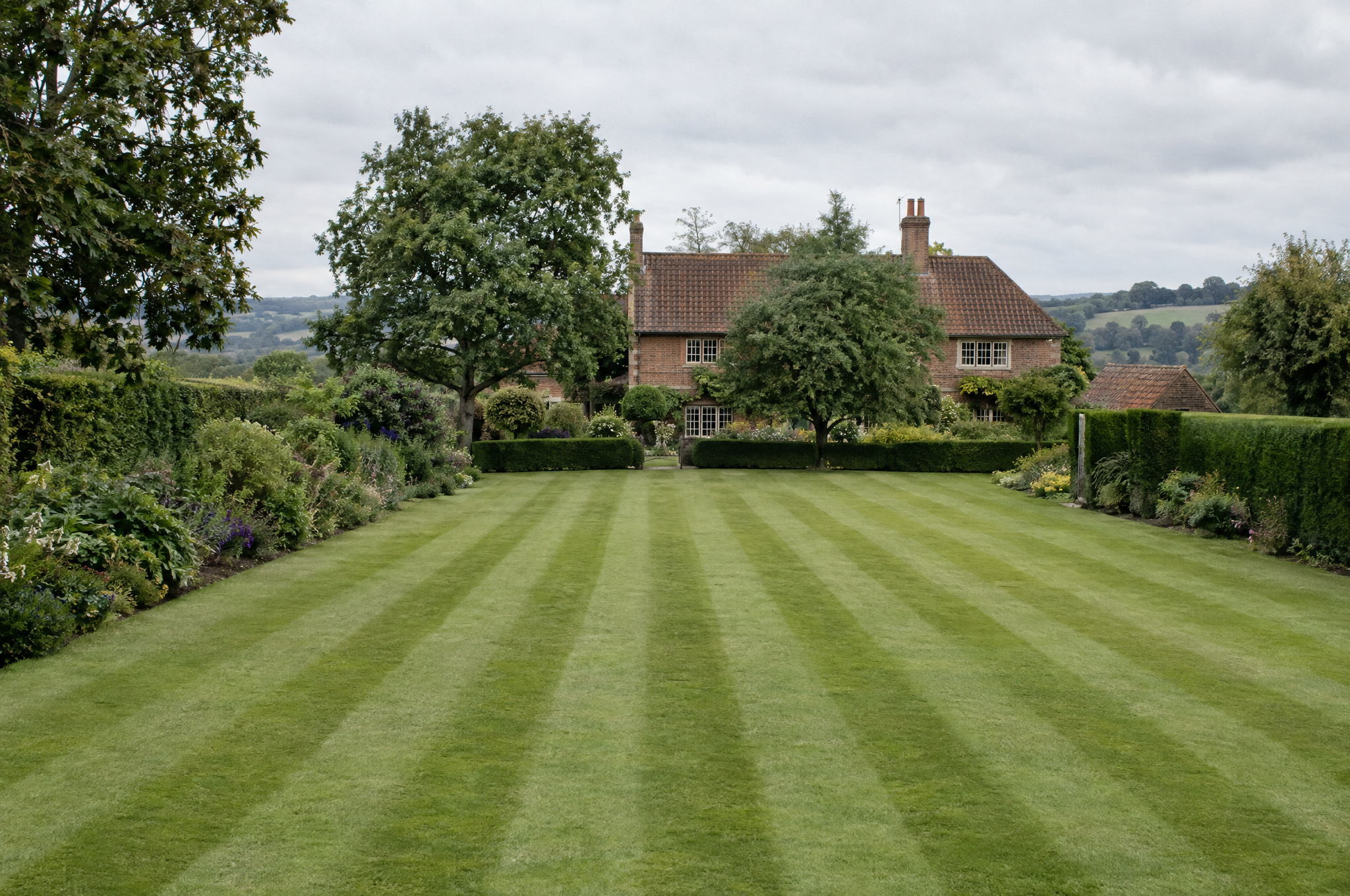

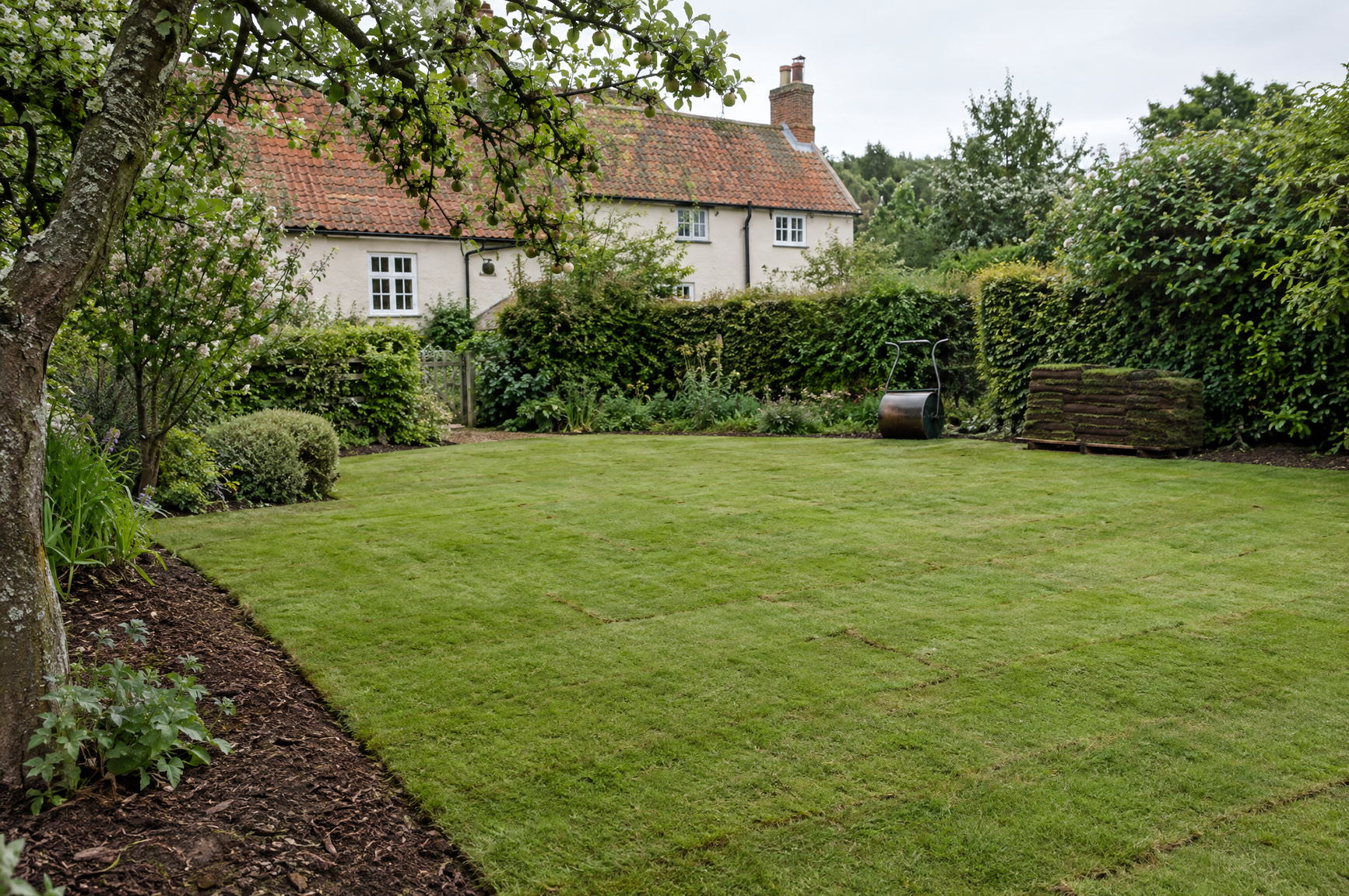
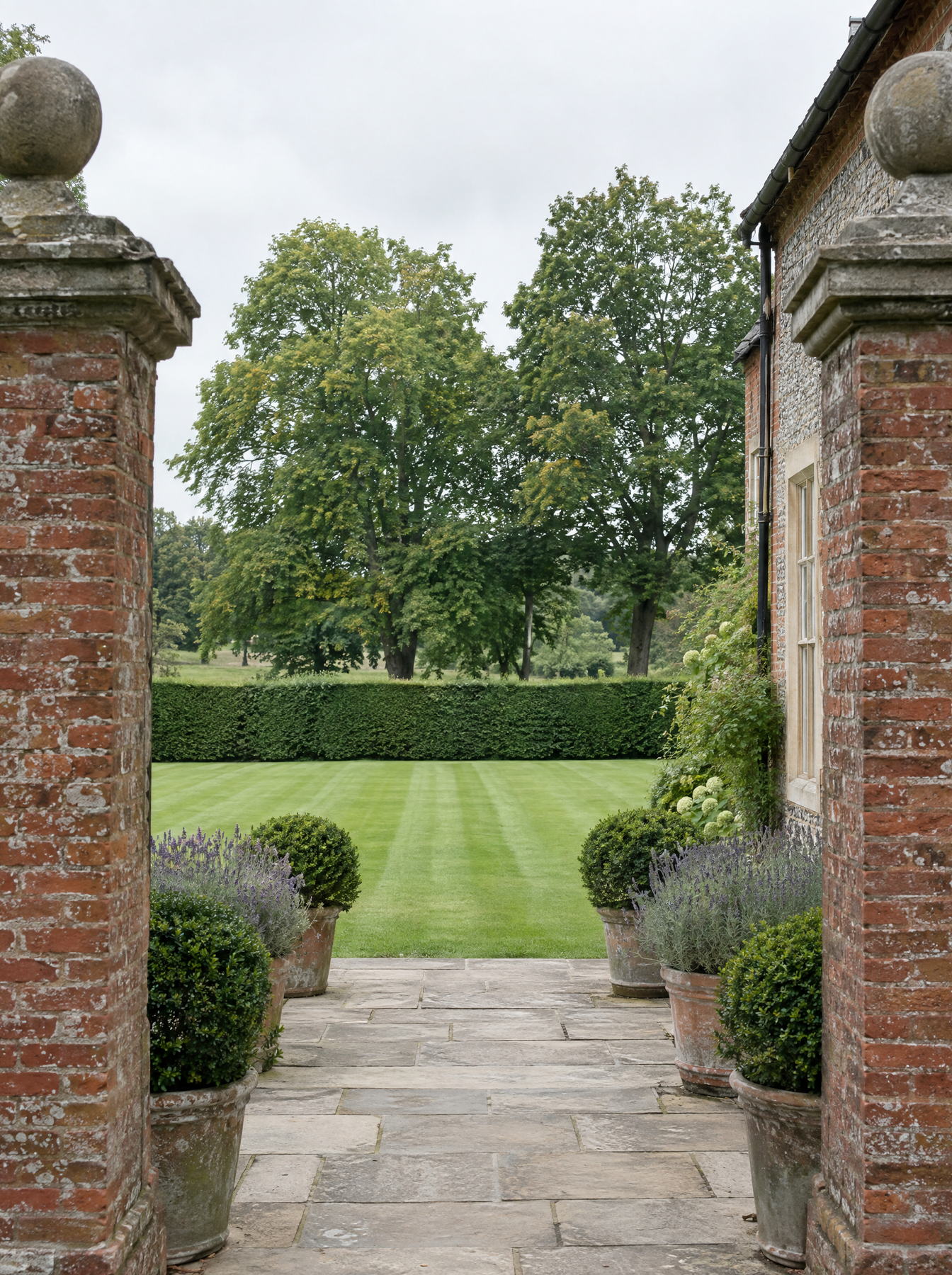
Suffolk Garden Maintenance covers the wider set of jobs that keep a country garden in good order through the year. Regular lawn cuts and crisp edging, careful weeding and considered pruning, seasonal tidy ups, the occasional one off restoration of an overgrown plot, pond cleaning and treatment, and jet washing of patios and paths.
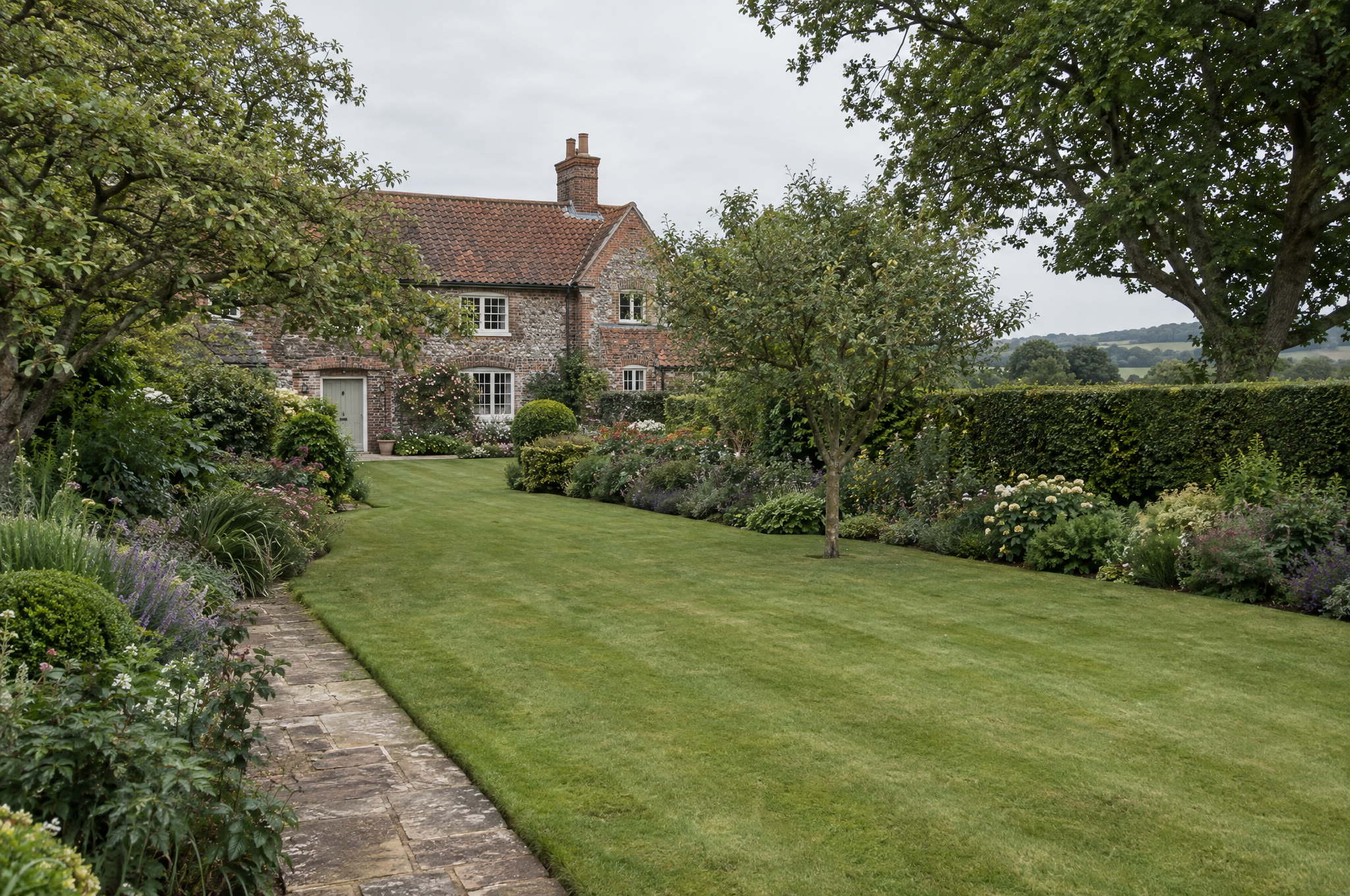
CARE
Garden CareA regular garden care round looking after the whole garden, with grass cutting, edges and beds kept calmly in good order season after season.
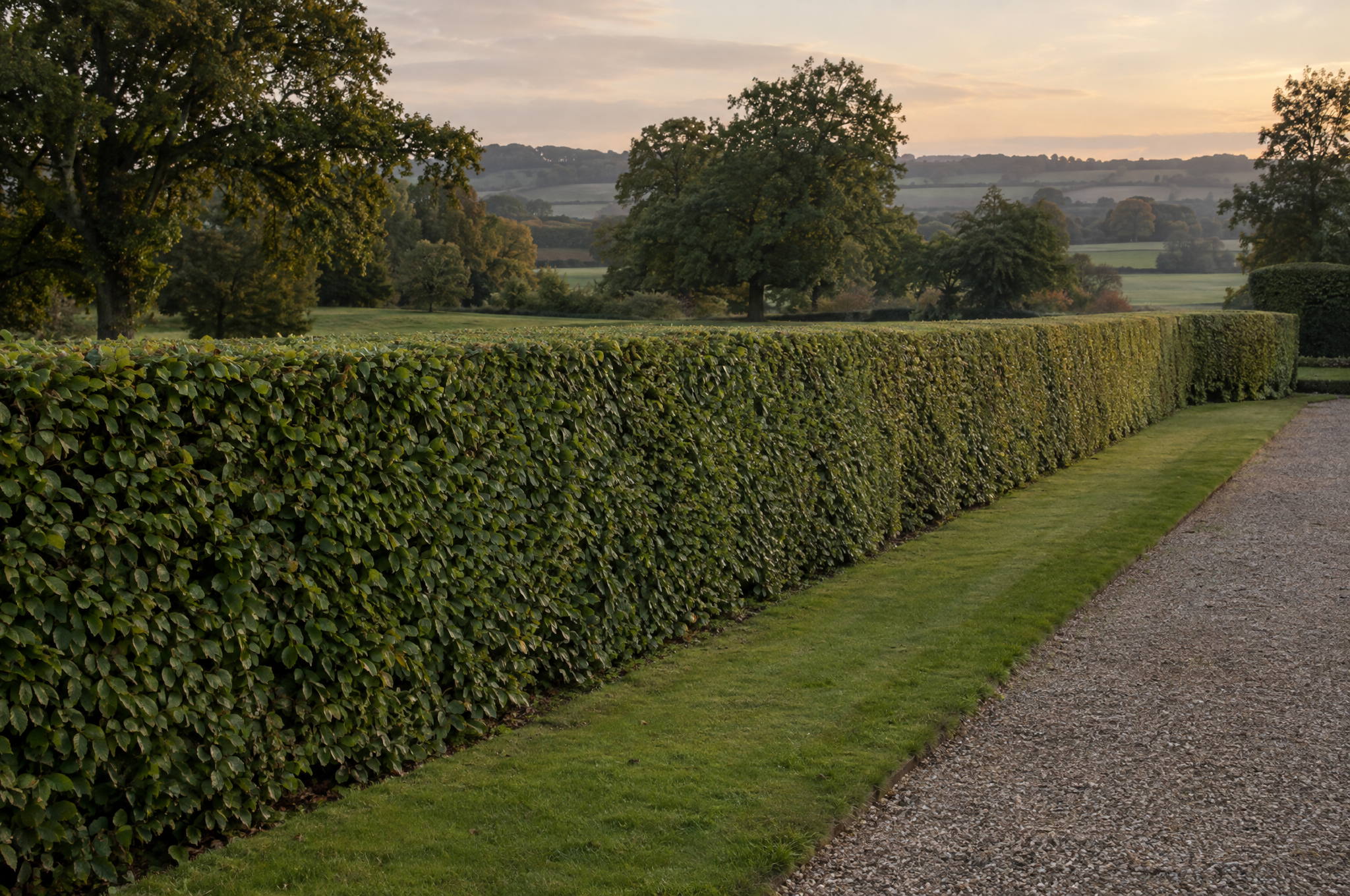
SHAPE
Hedge TrimmingEven cuts and careful shaping for boundary hedges, formal yew, beech, hornbeam, hawthorn and feature shrubs.
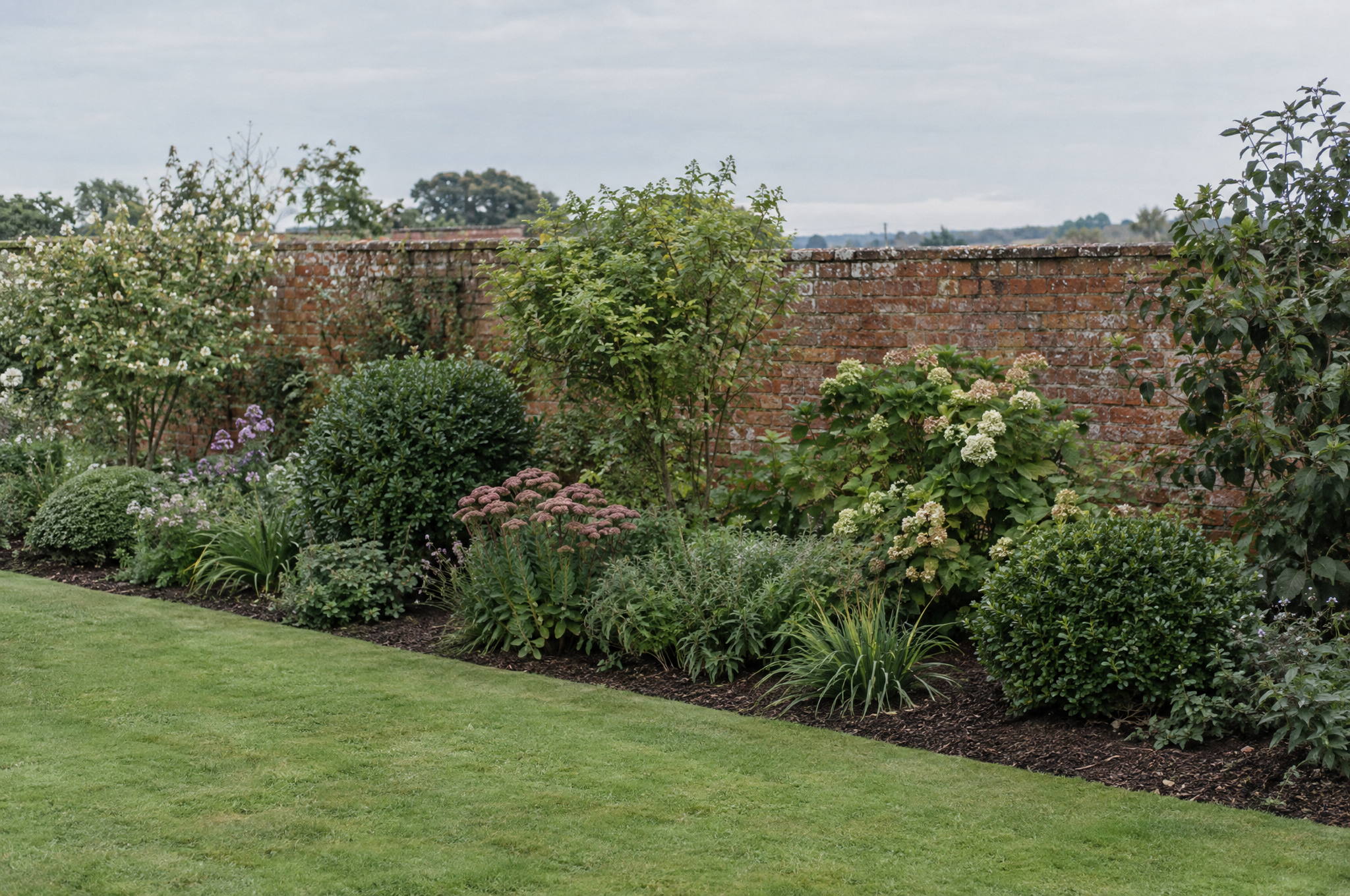
PRUNE
Weeding and PruningConsidered pruning of shrubs, roses, climbers and small trees, with beds, gravel and paving kept clean.
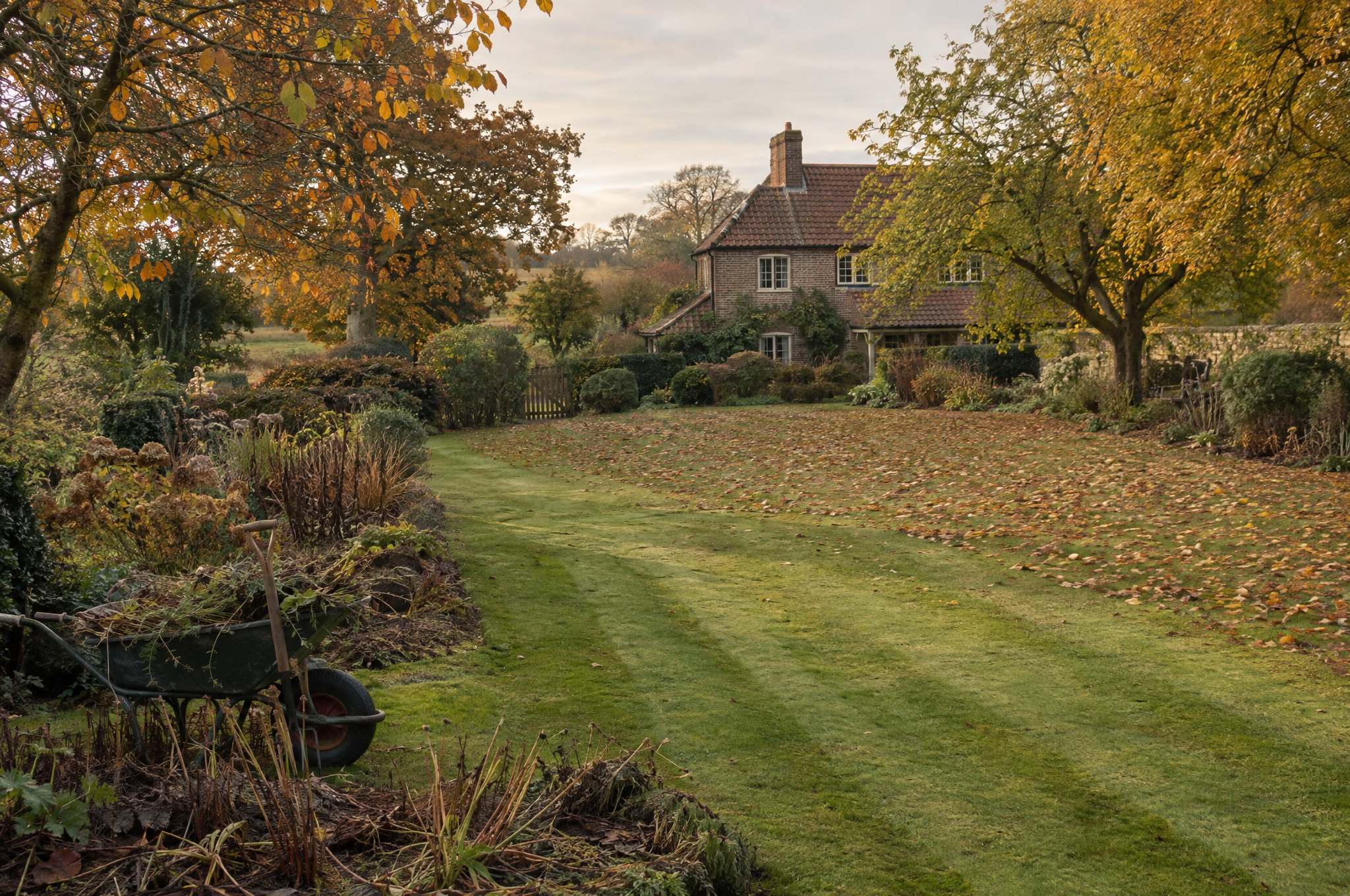
CLEAR
Seasonal Tidy UpsSpring resets, a midsummer garden tidy up and a pre winter tuck up for gardens that do not need a full round.
RESTORE
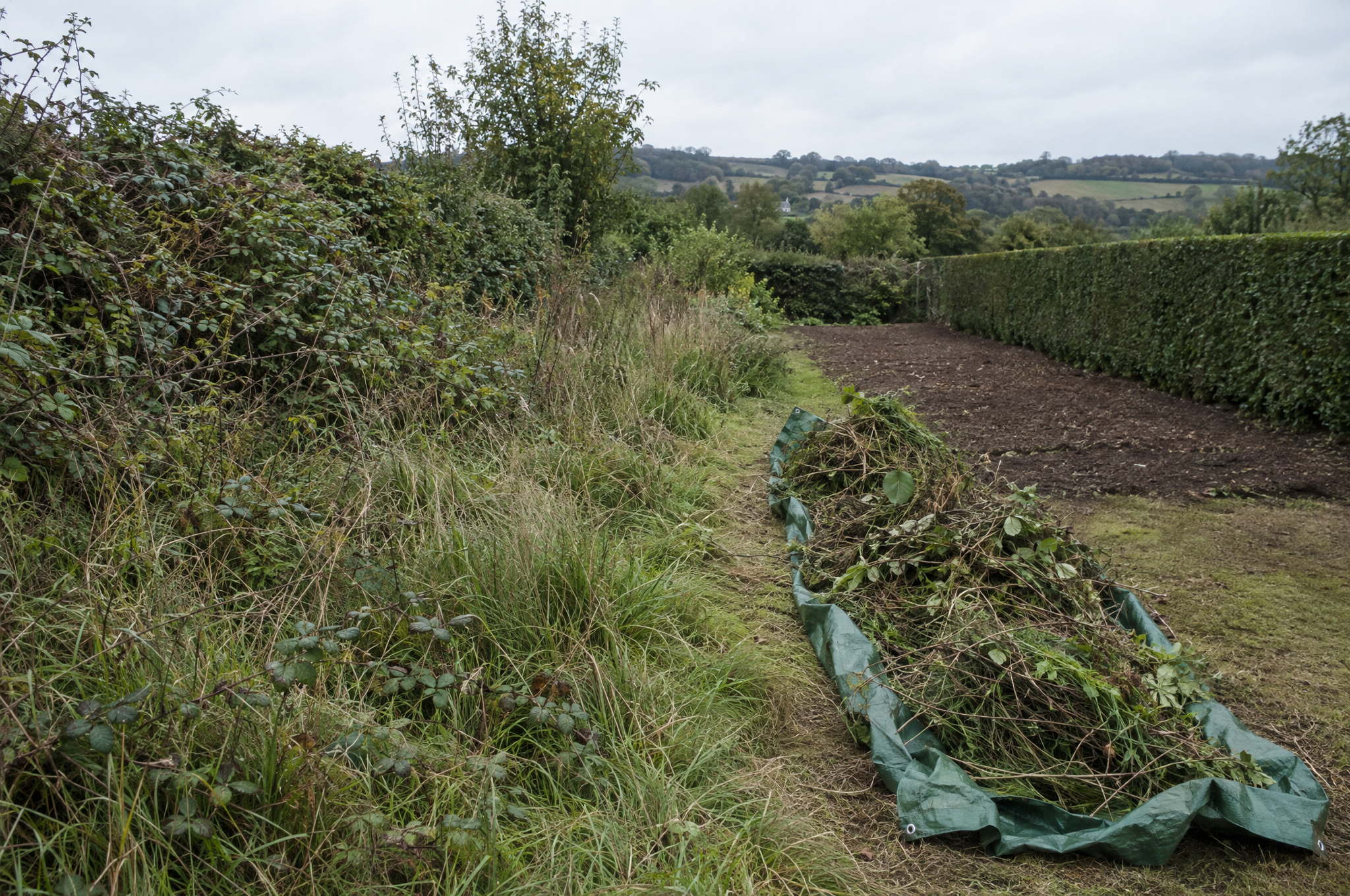
Garden Clean UpsOne off garden clearance and restoration of overgrown gardens, brought back into good order calmly and at your pace.

TEND
Pond MaintenanceRoutine pond care and pond cleaning, koi welfare, filter and pump checks, planting work and wildlife safe treatment.
WASH
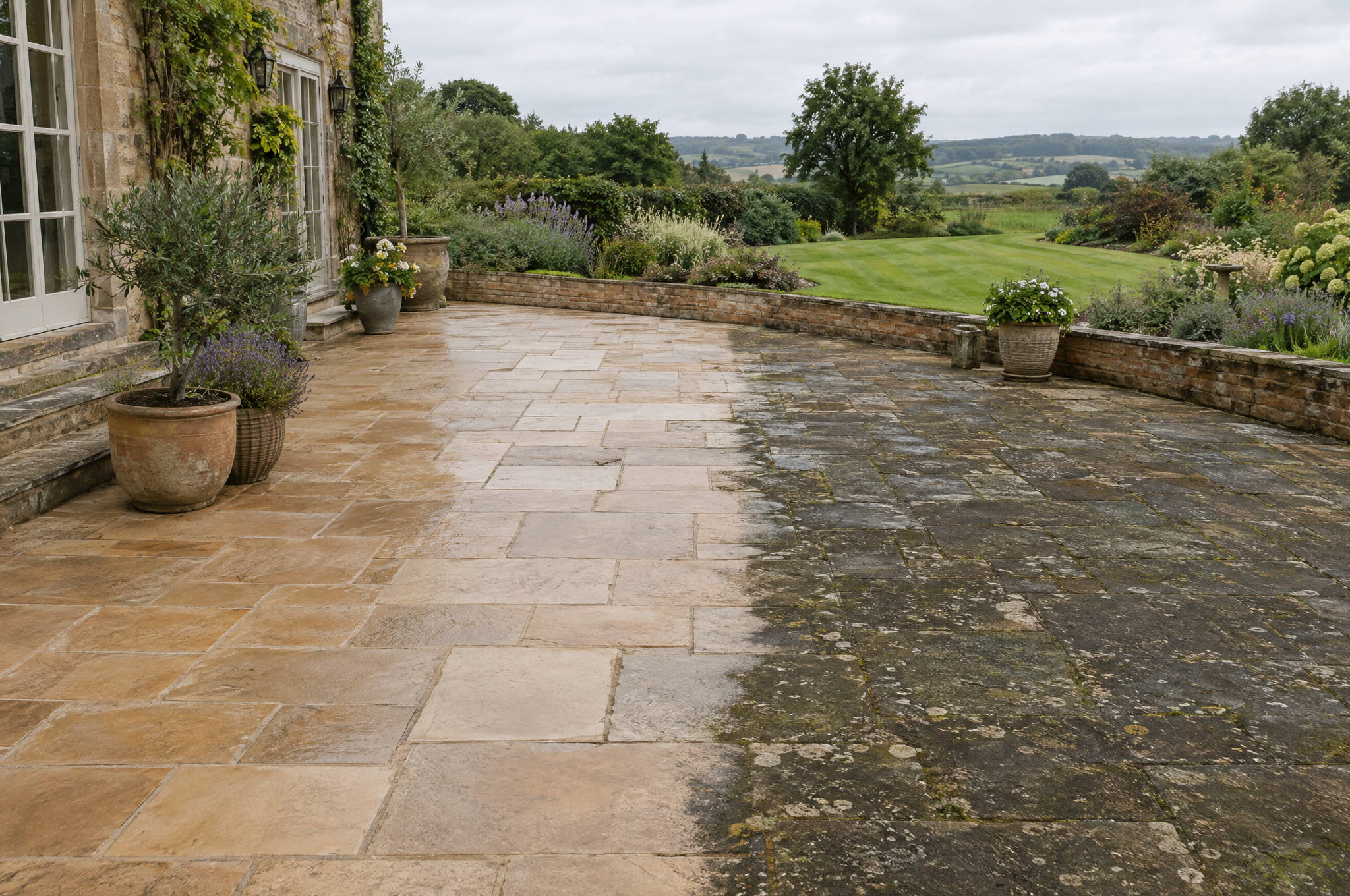
Jet WashingCareful jet washing of patios, paths, driveways and stonework, with the pressure matched to the surface.
Enquiries are read in person, by Elliott. A few lines about the garden, the kind of work you have in mind and roughly where you are in Suffolk is all we need to start. Where it makes sense, we will arrange a quiet visit to look round the garden and talk it through.